
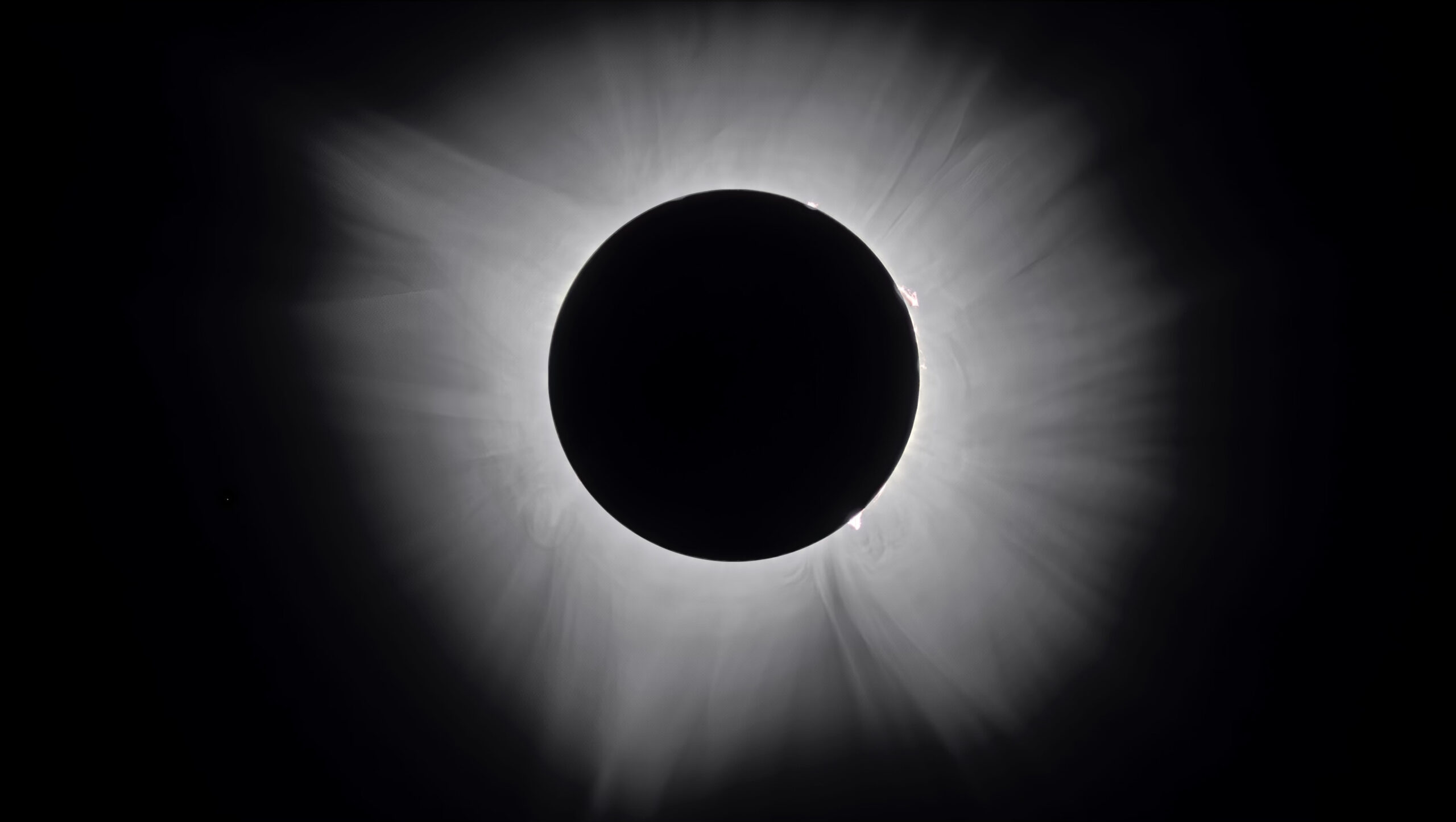
On August 2, 2027, the moon will swallow the sun for six minutes and 22 seconds over Luxor — the longest totality anyone will see until 2114. That single fact has already turned this into the most talked-about eclipse in a generation. But the shadow doesn’t stop at Egypt. It travels thousands of miles, from the beaches of southern Spain across North Africa to the Nile, and the smart move is to pick your spot soon, before the hotels fill up.
The one rule that matters
Totality is the only way to go. A 99% partial eclipse looks like an ordinary afternoon with a slightly odd light — it is not the same experience, and it will not give you the moment everyone is chasing. You need to be inside the path, full stop.
Beyond that, there’s real flexibility. You don’t have to stand on the exact centerline. Shifting toward the edge of the path costs surprisingly little totality time, and it can buy you a better experience, everything taken into consideration.
Start with what you want to see
Before you book anything, decide what you actually want to see and remember. One detail catches a lot of people off guard: how high the sun is in the sky changes dramatically along the route. Near the Strait of Gibraltar, it will hang around 38 degrees above the horizon. By the time the shadow reaches Luxor, the sun will be almost directly overhead. And the heat is another consideration. Temperatures along the Egyptian and Algerian stretch of the path will likely climb past 104°F (40°C), so plan for heat as seriously as you plan for the sky.
- Southern Spain: the easy option
- For anyone based in Europe, this is the low-effort, high-reward choice. Totality here is shorter than in North Africa, but the sun sits lower in the southeast. Roads, flights and hotels are all straightforward.
- Málaga — 1 minute 54 seconds of totality. Short, but backed by excellent transport and a long Mediterranean waterfront.
- Cádiz — 2 minutes 56 seconds. Founded by the Phoenicians around 1100 BC, it’s regularly named the oldest continuously inhabited city in Western Europe, and its old town occupies a thin spit of land with the Atlantic on three sides.
- Gibraltar — 4 minutes 28 seconds. The Rock rises straight out of the Strait, with Morocco visible across the water and one of the most recognizable skylines anywhere on the eclipse path.
- Melilla — 4 minutes 34 seconds. A Spanish enclave on Morocco’s own coastline, with a longer totality than Tarifa and a fraction of the attention.
- Tarifa — 4 minutes 40 seconds. Close to the centerline, looking out across the Strait toward Morocco.
Morocco: longer totality, still manageable
Morocco offers close to five minutes of totality with that same relatively low sun, which brings in the coastline, medinas and the mountains.
Tangier — 4 minutes 50 seconds. Spain sits visible across the water from this old trading port, and the Tangier medina climbs a hill above the harbor.
Tétouan — 4 minutes 51 seconds. A UNESCO-listed medina.
Chefchaouen — 3 minutes 39 seconds. You trade over a minute of totality for the famous blue-washed streets and mountain setting.
Algeria: for those who want to go where the tour groups won’t
Algeria sits largely off the main eclipse-tourism circuit, which is exactly its appeal. Oran is the practical base — a major coastal city with ferry links to Spain — while the towns further inland edge closer to the centerline and longer totality.
Oran — 5 minutes 9 seconds. Coastal scenery below the Santa Cruz fort.
Mostaganem — 5 minutes 7 seconds. A smaller, less-visited stretch of coast further east, with cliffs dropping to the sea and a quieter pace than Oran.
M’Sila — 5 minutes 22 seconds. Inland, arid, and a strong bet for clear skies.
Egypt: the main event
The eclipse track follows the Nile for a long way past Luxor, and that’s worth remembering. Two temple towns sit further south and inside the path: Esna, with its recently restored, brilliantly painted temple ceiling, and Edfu, about 110 kilometers on, home to the Temple of Horus — the best-preserved temple in Egypt precisely because it lay buried under desert sand for centuries before archaeologists uncovered it in the 1860s. Kom Ombo, further south still, sits nearer the edge of the path but is a realistic option for anyone who wants distance from the Luxor scrum.
Luxor — 6 minutes 22 seconds. The Valley of the Kings will be the Valley of the Eclipse. The longest totality on the route and the ancient capital of Egypt in one place — but expect the heaviest crowds by a wide margin.
Siwa Oasis — 5 minutes 31 seconds. Tucked near the Libyan border in the far west of the country, Siwa is the oasis Alexander the Great crossed the desert to reach in 331 BC, seeking out its Oracle of Amun — a detour into a completely different, quieter Egypt.
Edfu — roughly 5 minutes 40 seconds. Long totality, the country’s most intact ancient temple, and none of the Luxor bottleneck.
Tunisia: desert drama or a long coastal totality
Tunisia gives you a genuine choice: chase the shortest totality for the sake of a legendary desert landscape, or head to the coast for nearly six minutes under some of the most reliable clear skies on the whole route.
Tozeur — 1 minute 43 seconds. Totality won’t last long here, but the surrounding dunes and oasis towns doubled as Tatooine in the original Star Wars trilogy, and several of the sets are still standing not far outside town.
Sidi Bouhlel — 3 minutes 9 seconds. Known to film fans as “Star Wars Canyon” for the same reason, this narrow desert gorge would put you somewhere almost nobody else on the eclipse route will be standing. Except maybe a couple of jedi warriors.
Djerba (Houmt Souk) — 4 minutes 43 seconds. Tunisia’s best-known beach island, reached by causeway from the mainland, with a whitewashed old town and far more hotel beds than anywhere else on this stretch of the path.
Sfax — 5 minutes 41 seconds. Tunisia’s second-largest city and a working port town rather than a tourist hub, which means real infrastructure without the crowds, plus strong odds of a clear sky on the day.
Plan the experience
Whichever stretch of the path you choose, give yourself margin. Arrive a few days early. Book flights and rooms as early as possible; demand along this entire route, not just around Luxor, is going to be intense.
Also read about the new night train from Milan to Brussels.