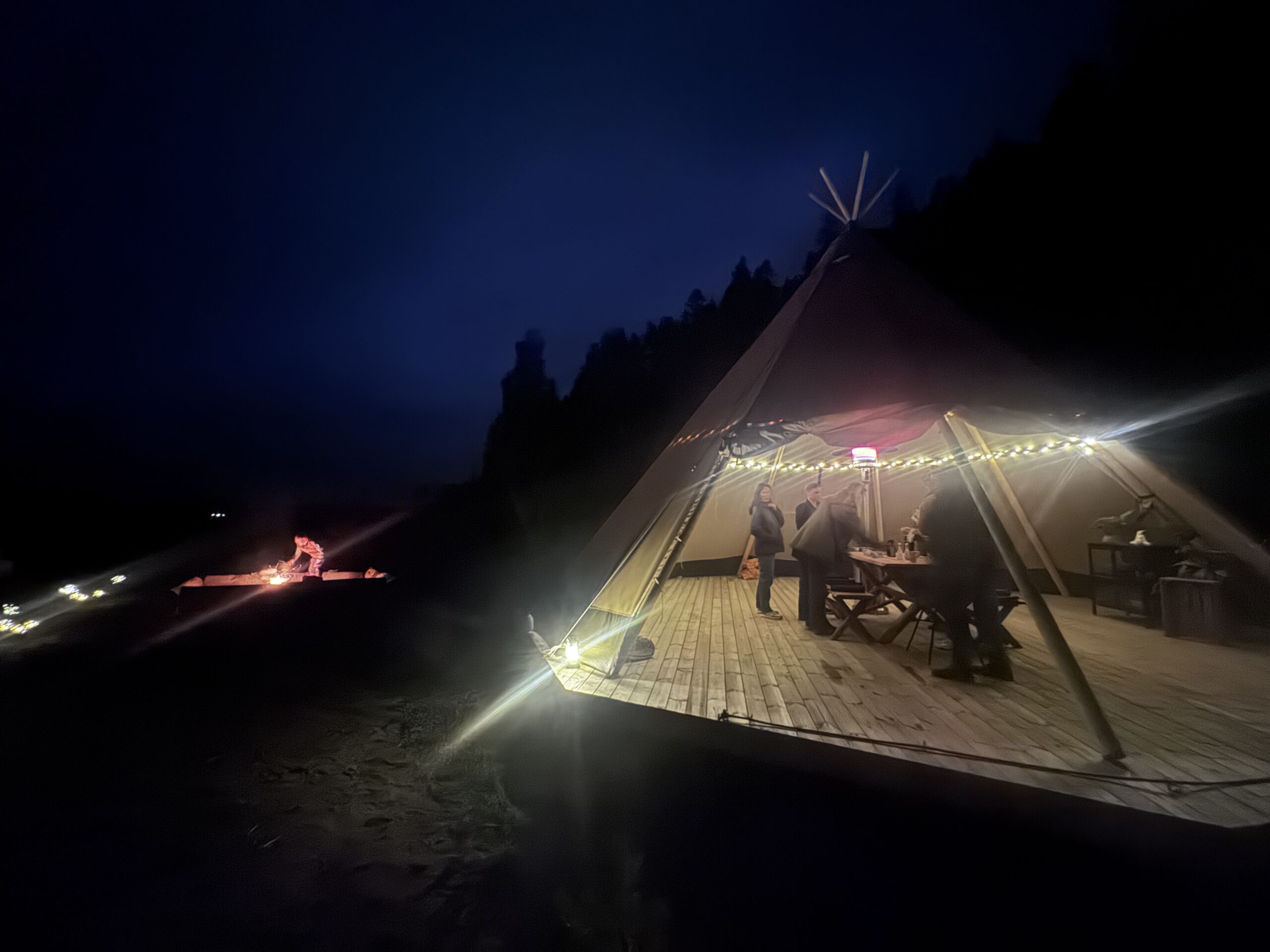

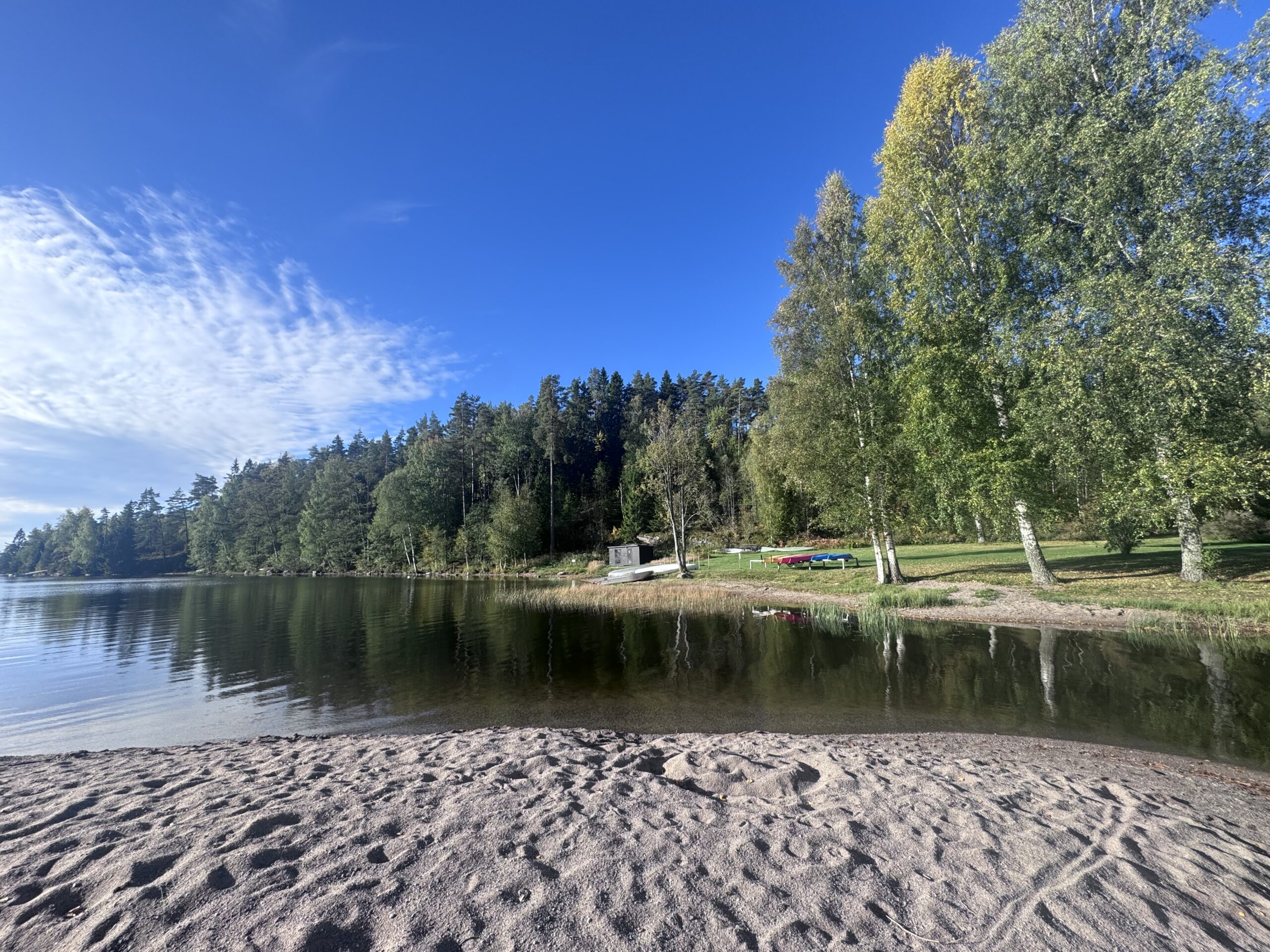
A forest bath definitely doesn’t remove dirt. Removing shoes is optional. We were invited to try it out at Ragnerud Vandringsdestinasjon in West Sweden.
Shinrin-yoku means “forest bath” in Japanese. The term appeared in Japan in the 1980s, when the government promoted it as a way to overcome work-related stress. It draws on much older Shinto and Buddhist traditions.
Now the concept is spreading to Scandinavia, where many of us take our forests for granted. Forest bathing has something going for it. Studies have linked time among trees to lower blood pressure and less anxiety. And if you do it on your own, it costs nothing and needs no equipment (though you can use a mat or a hammock if you like).
All you have to do is walk slowly, breathe deeply and pay attention, one sense at a time. Be in the moment. And if you work with a screen all day, it might be just what you need.
Linus from Stockholm
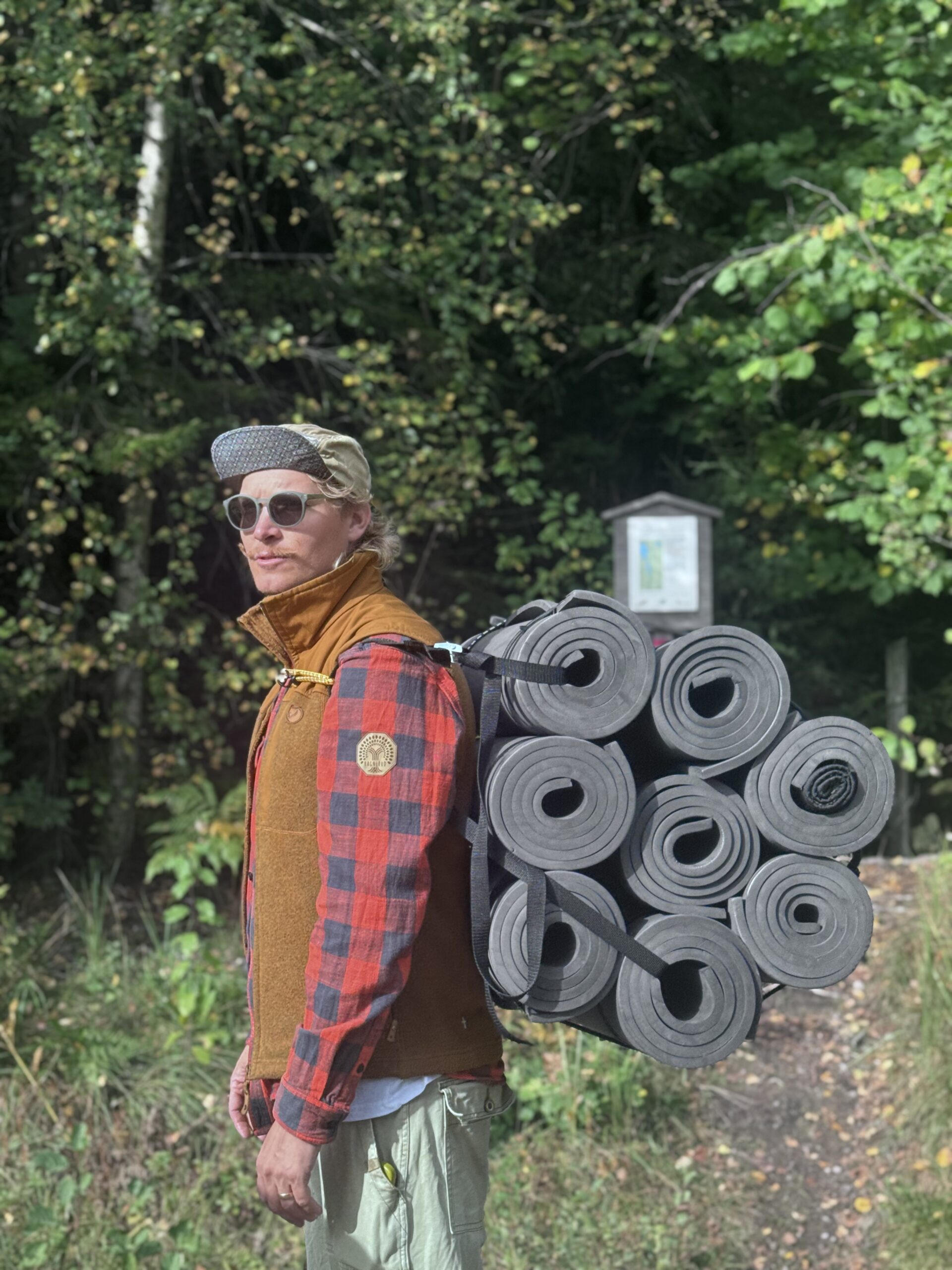
Linus Bergström was our guide in the Swedish forest. “I’m a city boy,” he admitted, although he didn’t look like one, with his plaid shirt, hunter’s cap and vest, beige cargo trousers and his display of handiness with an axe. His most distinctive trait was a dapper handlebar moustache, waxed and twirled into theatrical perfection. He looked like he had stepped out of a 19th-century bourgeois photograph. But a pair of oversized sunglasses brought him back to the 21st century.
Linus grew up in Stockholm, met Marielle Örtengren, and moved “into the forest” to her childhood home in Dalsland. Her family has run Ragnerud for three generations. A few years ago, Linus told me, they decided to take the place in a new direction. Ragnerud used to be a standard Swedish campsite. Now it is a hiking destination, with more than 130 km of trails through the Kroppefjäll wilderness, aimed at eco-conscious trekkers who come for the nature rather than the campground life.
You can see the split in the shop. On one side, toys and games for the children hanging around the campground. On the other, outdoor gear and an organic focus. Really there are three groups sharing the shoreline: the campers, the outdoorspeople, and the eco-minded nature-and-mindfulness crowd. The campers are still loyal and still fill the pitches, and the restaurant (more on that later) is a cut above your average campsite’s.
Shoreline cabins
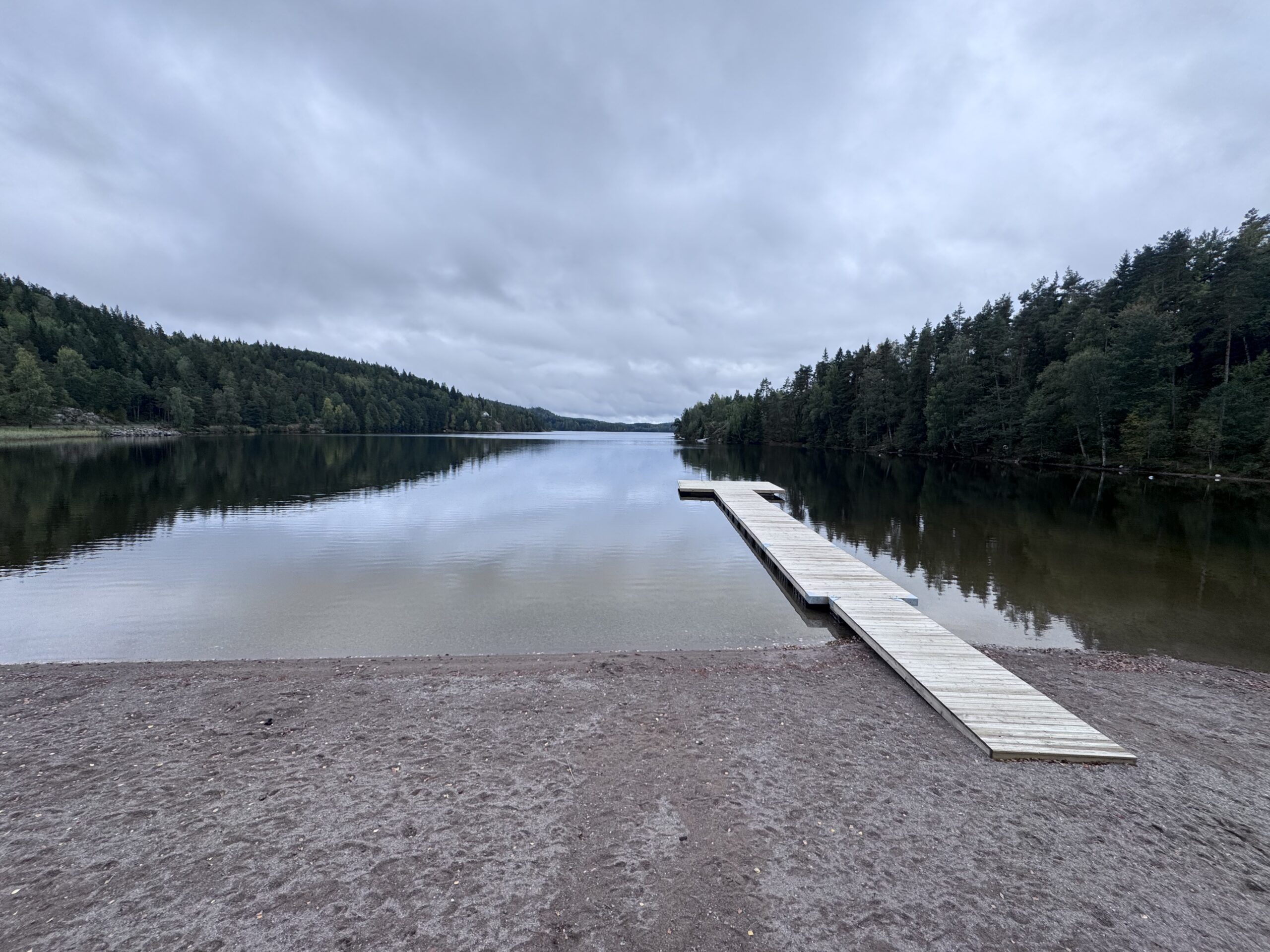
I shared a lakeside cabin with two of my colleagues. It was about 100 paces from the pier on Ragnerudsjön, which I had previously only seen on Instagram, and another 100 to the little wooden sauna hut. Location, location, location. The cabin had two small double bedrooms and two loft bedrooms curtained off from the main space, and the loft facing the lake had the best view.
In the evening, the staff brought us a breakfast basket with everything we needed: coffee for the brewer, oat milk to go in it, Swedish whole wheat rolls, tubes of kaviar and cheese, bell pepper, cucumber, granola and yoghurt. And of course freshly pressed orange juice.
The cabin itself was nice but basic. Each of us got a sealed plastic bag of crisp white linens, and we spent a few minutes making up the beds with sheets and duvet covers.
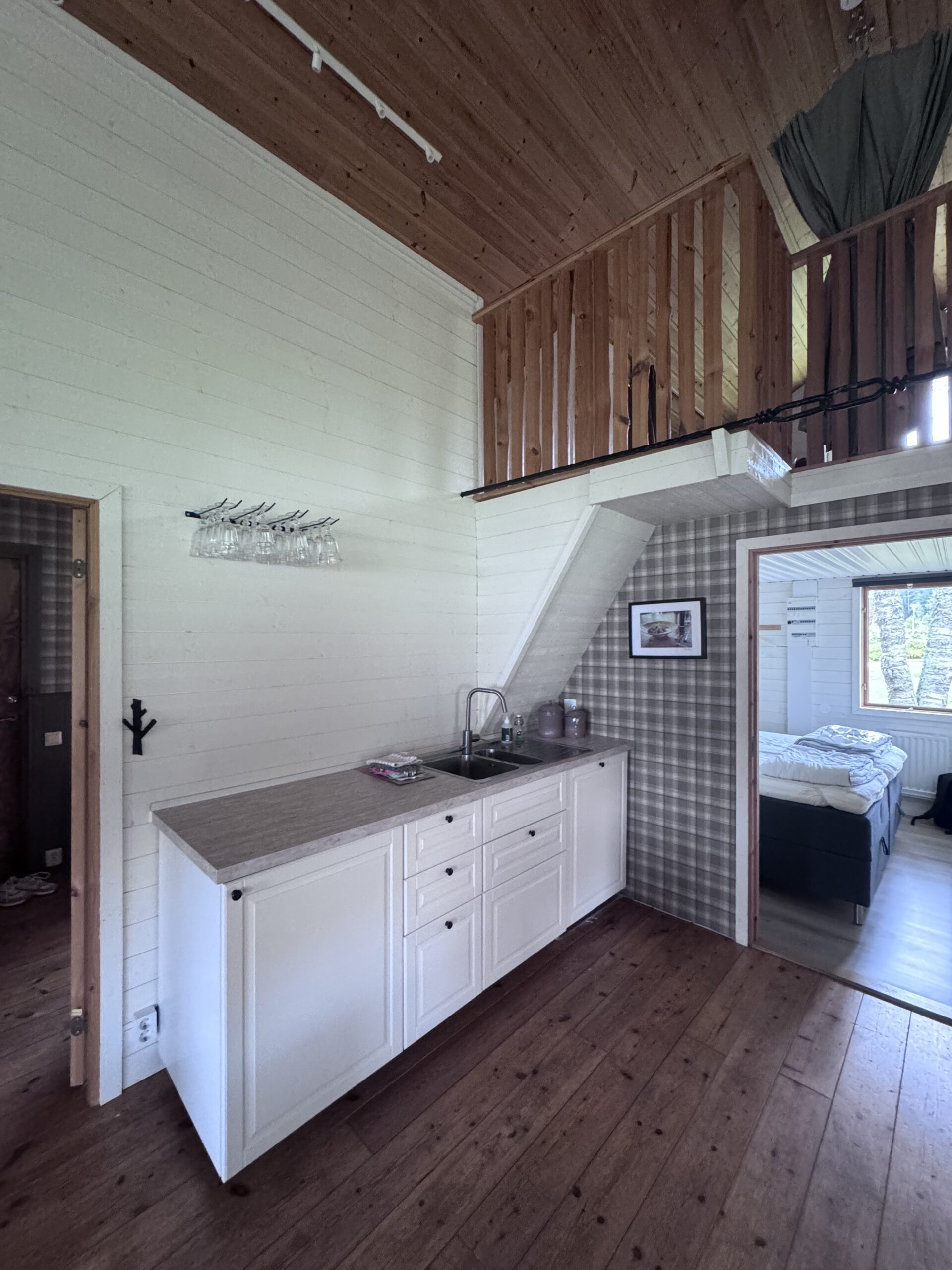
It was clean and simple, and the setting made up for it: the trails started right outside the door.
Linus told us that if we set out with camping gear in our rucksacks, we would probably meet only three other people in three or four days of trekking. As this is Sweden you probably wouldn’t even have to say much to them. A ‘hej’ would do, or if you’re feeling very talkative: ‘hej hej’.
Linus was eager to get out into the woods with us, and right after we had settled in, we were off on our walk, but not yet officially forest bathing. First we needed to sort out lunch.
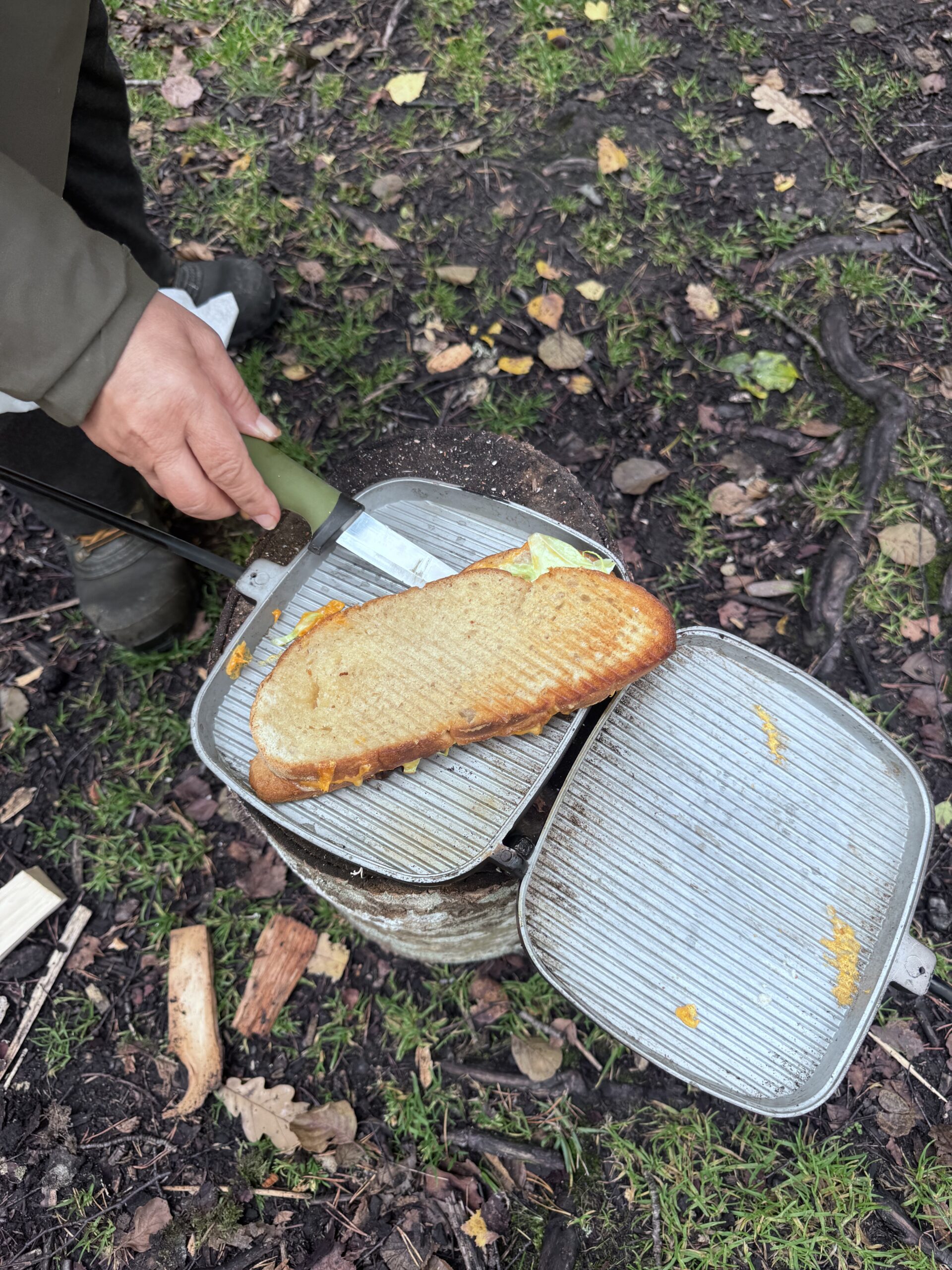
After about 1 km there was a picnic site right next to the lake. Linus had brought some firewood (hence the axe) and we proceeded to build a fire. He had also brought some prepared sandwiches, and some very lightweight grills to stick them into the flames.
The first batch was slow, so I surmised: three minutes on one side, flip, one more minute. My maths turned out to be all off. The result was a snafu and lots of smouldering. But no matter if it was charred, everything tastes great outdoors.
After the toast, Linus shouldered a bundle of rolled-up camping mats, one for each of us, tied together so they worked as a backpack. Then he explained what they were for: we would be asked to get down in the damp moss, to lie on the forest floor. I wasn’t sure this was for me. After all, I’m a proper city girl.
“Oh, my hip hurts! My hip hurts!” I blurted out, laughing. It was a joke, although the painful hip part was true. Perhaps it really would prevent me from going all the way to the proper forest bathing spot, depending on how tough the hike would be to get there.
Ten metres apart
I made a deal with Linus. I would join for the pre-bathing part, the walk in the woods. There he would lead us in a mindful walking meditation. At a point closer to our cabin (the path doubled back through the woods) I would get the option to continue up a steep slope to the actual forest bathing site, or I could return on a short path down. So be it.
When we left the gravel road and plunged into the tall pine forest, Linus gave his final instructions.
“You can only talk about what you’re experiencing now. Not about things in the past or the future.”
In fact, there would be virtually no talk at all, as he also told us there should be about 10 metres between each person. We would focus on one sense at a time during the walk, and the first one was touch.
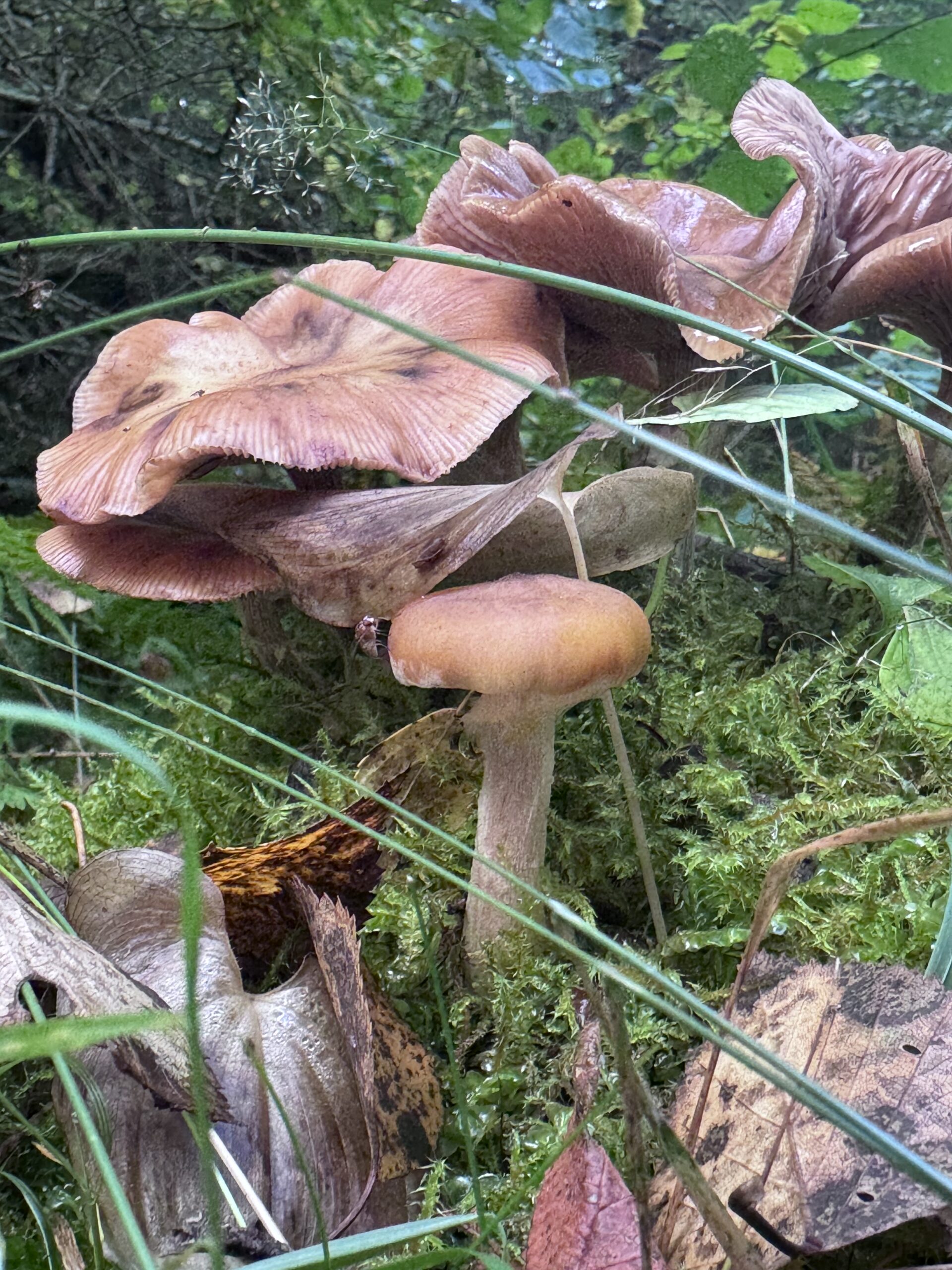
“Pick up things you see, maybe pick a leaf and just feel it with your fingers, don’t look at it. Maybe feel it with your cheek or rub it in your hands until it crumbles. Then pick something new,” he said.
With that said, we entered the forest. It was a solemn occasion.
I trudged upwards, careful with my hip, picking up leaves and twisting them between my fingers. I did the same with some bark, a small twig that I broke off a tree, and some moss. Then I saw a slimy mushroom.
Unsure, I decided that mindfulness wasn’t all about noticing only “nice” things. So I broke off the cap of the rotting mushroom. Ugh… inside were squirming maggots. All trying to escape the human who had just picked them up… That definitely brought me into the moment, at which point I flung the mushroom, poor creatures and all, into some rocks. I found some clean moss and continued, with much less gusto.
Linus gave us a cue each time before we changed our focus. The next sense was smell (imagine what something smells like, then take deep breaths to really take in the smell), then sight, which meant looking at very small things. Last came hearing.
I cheated during the sight part and took a lot of photos. In a perfect world, our phones were supposed to be turned off. But I was at work, and needed my work tool: the camera phone. And I felt I learned something about seeing very small things by this meditation. So all was not lost.
If you come to a fork in the road, take it
Soon enough we came to a fork in the path. Here Linus stopped and gave me the option to return. We had already climbed a fair bit, and my hip was creaking a bit. There were two more kilometres to go, including a steep incline.
So the rest of the group carried on to find a clearing, lie on their mats, listen to the woods and walk barefoot in the wet moss. I strolled back down to the sauna. For me, it was the right call that day.
Maybe it’s an excuse, so I will be keen on going back when I am able, and get the full bathing experience.
Worth the drive
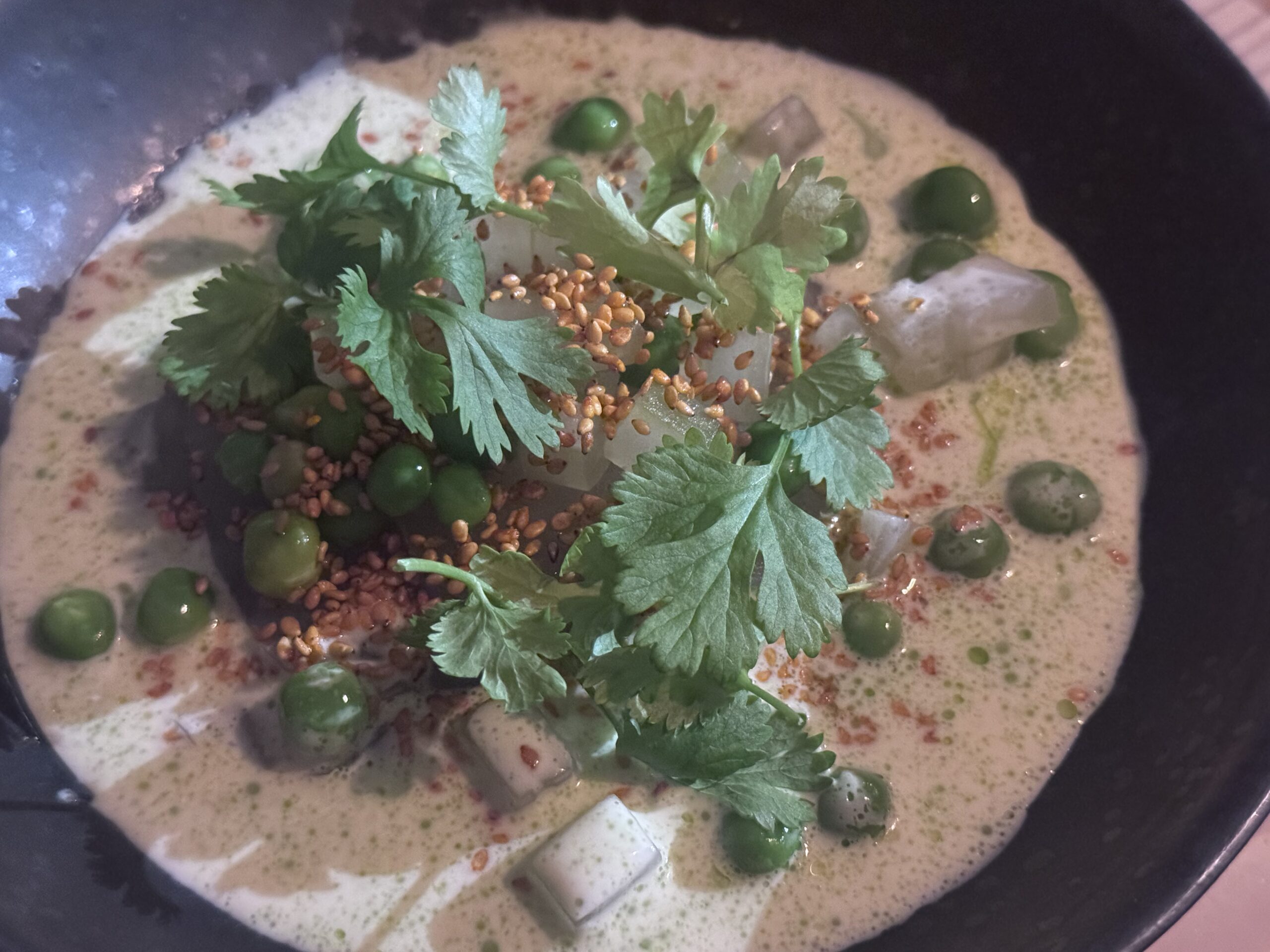
Ragnerud is nowhere near a population centre of note, which makes the restaurant a surprise: Ragnerud Kök has diners come in from up to an hour away, and the food explains why. The menu is built on ingredients from Dalsland and changes with the season. The autumn menu has cured halibut with dill cream and kimchi sesame, a raw beef tartare, and the house signature, kroppkaka, served with chanterelles from the Kroppefjäll forest outside, lingonberries and browned hazelnut butter. I had the cured halibut as a starter. I’d drive an hour to eat there, for sure.
Practical information
Cabins: from 895 to 2,995 SEK per night, depending on size and standard. Open April to October. More at Ragnerud Vandringsdestinasjon.
Getting there: From Gothenburg it is about 1.5 hours by car. Drive north on the E6, then take Route 172 toward Bengtsfors; Ragnerud lies about 20 km north of Färgelanda. Turn off Route 172 and follow the small paved road for 3 km to the lake. Without a car, take the train from Gothenburg to Mellerud or Uddevalla, then a bus to the Tångelanda stop.
I was with a group of mindfulness and wellness-interested women journalists invited by West Sweden tourism.