

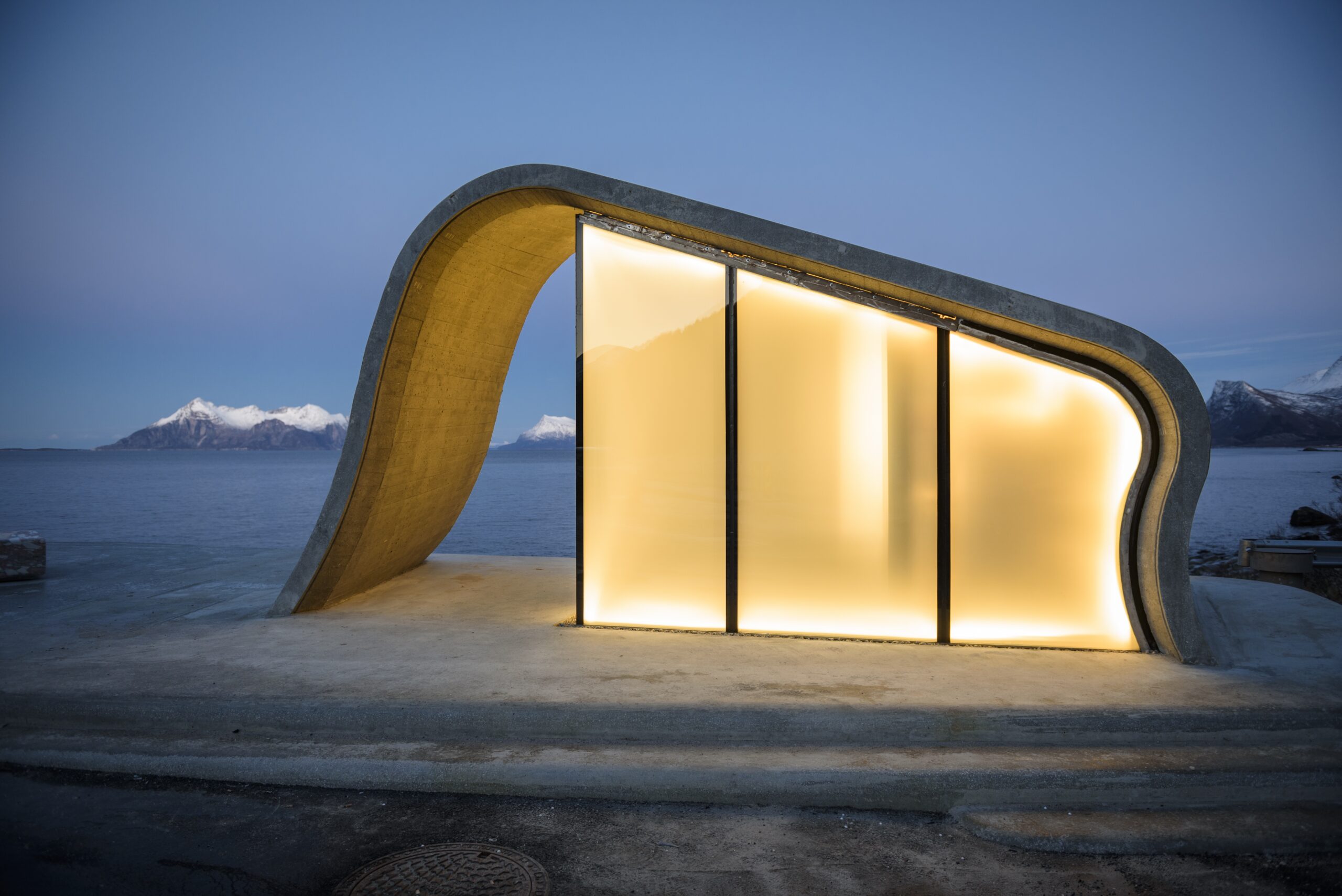
See the famous s***houses! Wait until you see the price to decide if you gotta go.
Here is the complete, step-by-step guide of Norway’s Toilet Tour (ultimate version). Don’t miss this golden opportunity.
Why do toilets seem to be on everybody’s lips these days? It all started with a president who said Norway “has become a shithouse country”.
Visit Norway answered by showing off Norway’s epic, scenic toilets. Those toilets, despite being immaculately clean, decidedly went viral! The whole campaign basically exploded.
So now the world seems to be asking: how do you try these famous Norwegian toilets out for yourself?
Visit Norway’s own best-toilets article (see also their Instagram and Facebook accounts) names eleven, all on the Norwegian Scenic Routes. They are spread all along the mountain and fjord-filled country, from Rogaland in southwestern Norway, to Finnmark in the far north.
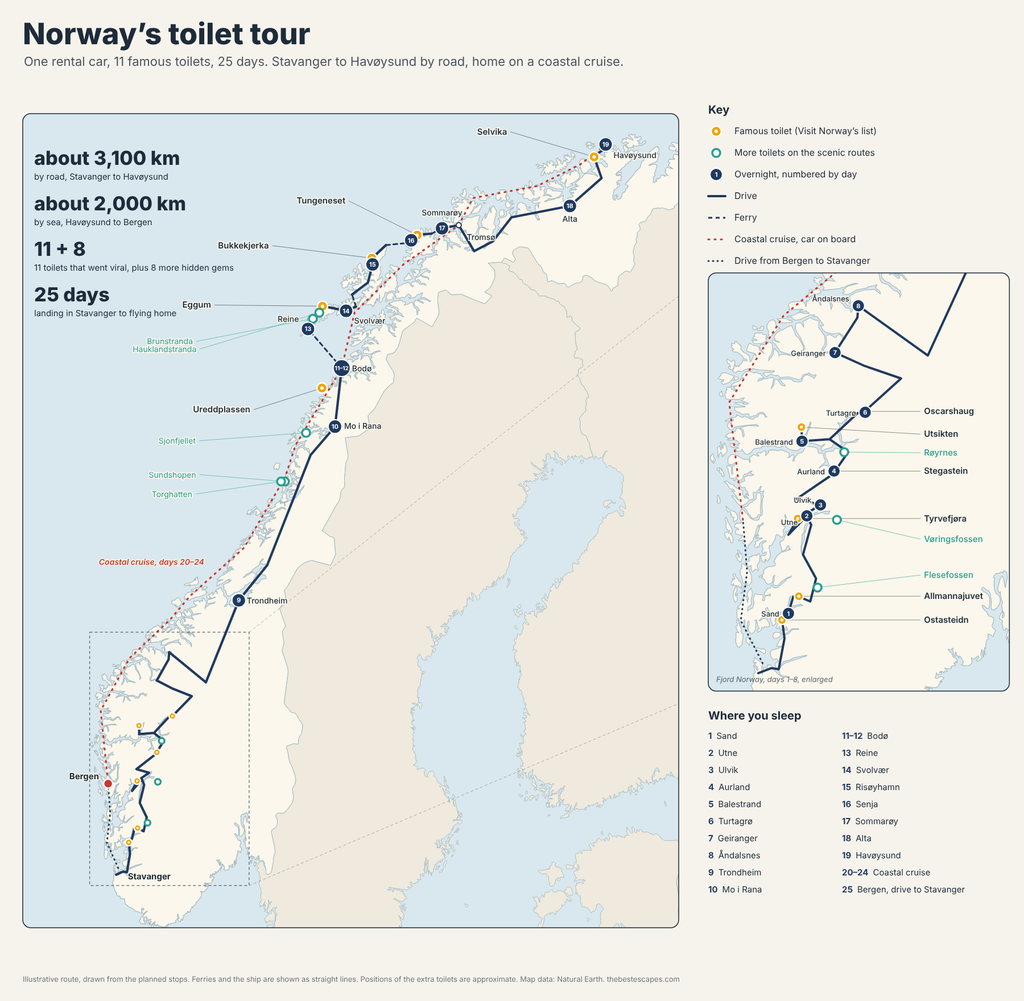
Norway has one of the longest coastlines in the world, and seeing (and trying out) all of the toilets would involve lots of curvy roads, driving around fjords, crossing some of them in ferries, and of course driving through some very long, dark tunnels and over mountain passes. The Norway Ultimate Toilet Tour will most likely take you more than three weeks unless you do a rush job, or unless you bring your own private helicopter to see all the shithouses!
We set to the task of planning a feasible trip for two people and a rental car. You will pass water several times. Bodies of water, that is.
Here is the full version where you see and admiringly use as many scenic restrooms as possible. To make it more of a complete, luxury experience, we have included putting your rental car on a coastal cruise liner to get back south from Northern Norway.
There are many ways you can save money on this version – stay at hostels, camping grounds or Airbnb’s instead of the hotels we’ve chosen. You could only do part of it. The last toilet on the schedule entails many hours of extra driving! Or if you come from close by (the Nordics or countries such as Germany, Netherlands or Poland) you could drive your own car to Norway and not have to fork out the money for a rental car. But you can take this as a ballpark guide for a full Norwegian Toilet Tour.
In this version we have assumed that you will need one rental car, a handful of ferries and a ship home (a shorter, practical version of some praised toilets in western Norway is a separate five-day guide.)
And an important point: this full version should be planned for the summer months! That is when all the roads (and the toilets) will be open for doing your business.
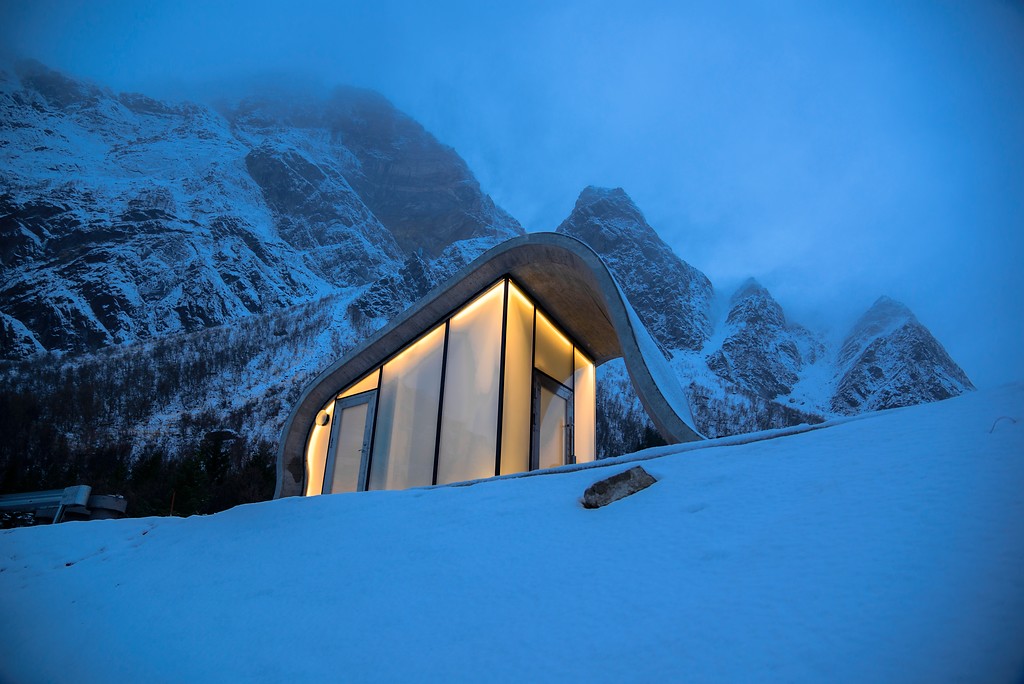
That said, some of the most striking photos of Norway’s ground-breaking toilets are taken in winter, and a few of them are open all year. Ostasteidn in Ryfylke and Ureddplassen in Gildeskål are open all year, and the new service building at Ersfjordstranda is meant to stay open all year too. Stegastein stays open as a viewpoint, but its toilets close from late October to early May. Most of the other scenic toilets, among them Eggum, Tungeneset, Selvika and Bukkekjerka, are open only from about early May to early October, and the mountain roads over Aurlandsfjellet and Sognefjellet are closed in winter. So if you want to see all of them, go in summer. If you want to see a few of them with snow on the roof, check each one first and expect a different route.
The trip in short (or long)
You land in Stavanger, collect one rental car and drive it to the top of Norway. The drive comes in thirds, or as the Irish would say, in turds. Days 1 to 7 are the southwest and the fjords: Ryfylke in Rogaland, Hardanger, the Sognefjord and the road to Geiranger. Days 8 to 12 are the long drive north through the middle of the country, past Trollstigen, Trondheim and Helgeland to Bodø. Days 13 to 19 are the north: Lofoten, Vesterålen, Senja, Tromsø, Alta and Havøysund. On day 20 the car goes onto the Hurtigruten or Havila coastal ship at Havøysund, and a little more than four days later you land in Bergen. Day 25 is the drive back to Stavanger and the flight(s) home.
The route involves over 3000 km of driving (about 50 hours behind the wheel). Obviously, you may need to use most of those epic facilities. This is followed by about 2000 km at sea, where toilets will be available — extra handy in case the weather gets rough.
The eleven good-looking lavatories on Visit Norway’s list are all on this route. A handful of other scenic toilets on the Norwegian Scenic Routes did not make that list but are close to the route, and we have added the ones that are worth a short detour.
Southern Norway’s top toilets, days 1 to 7
The west is where the toilets come thickest, so you reach one receptacle nearly every day. One famous one, that is (don’t worry, there will be other toilets you can use at your discretion.)
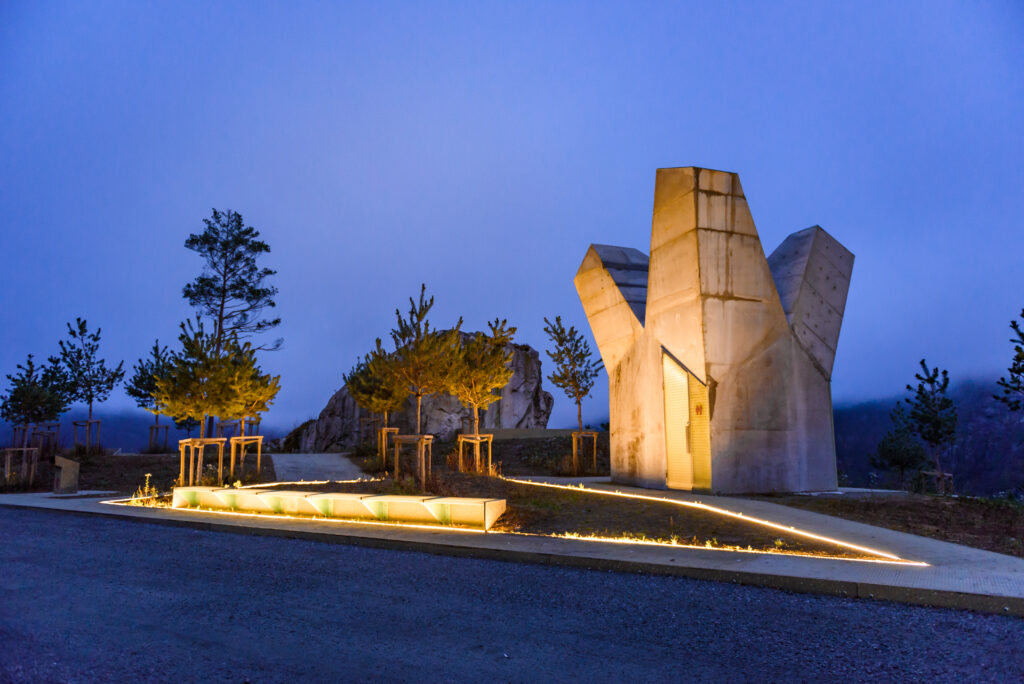
Day 1: Landing at Stavanger Airport (Sola), you collect the car, take the Lauvvik ferry to Oanes and drive road 13 to Sand. The first toilet is Ostasteidn, on the west side of the Sandsfjord. It was designed so that moss grows on the outer walls. You can stay over at Ryfylke Fjordhotell in Sand, about 2,150 NOK ($235) for two with breakfast (all prices are estimates, checked October 2026 for June 2027 dates).
Day 2: You start with a drive to Sauda on road 520 to Allmannajuvet, a Peter Zumthor design next to a zinc mine museum. The toilets here are open from early March to early December. On the way back towards Røldal you pass Juvo, a rest area on road 13 just north of Nesflaten that opened in November 2025. It is a sightseeing stop with two viewpoints over the gorge and a short walk along the old road to the Kvelven tunnel, one of the first road tunnels built in Norway (no toilet is listed there).
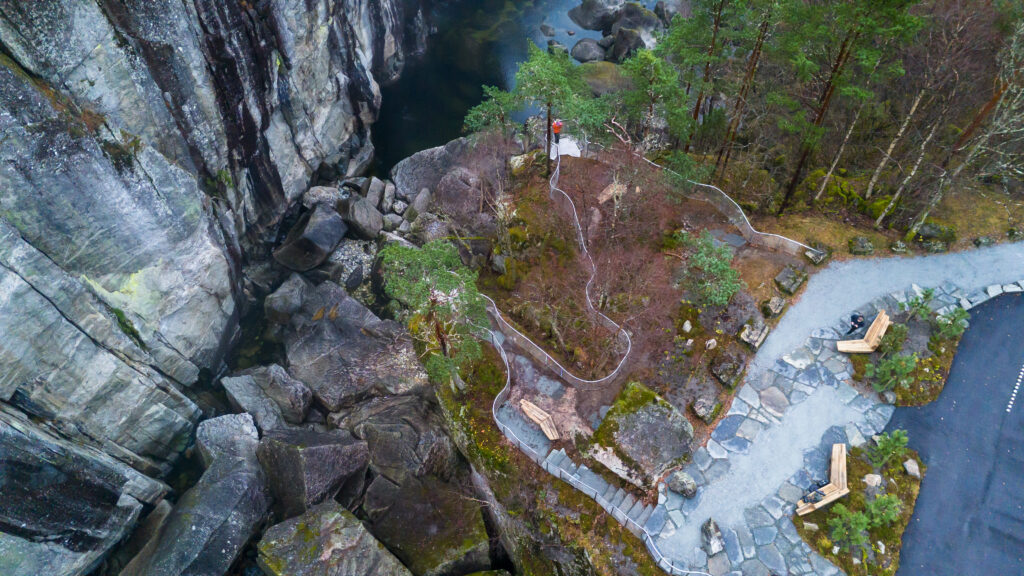
Foto: Frid-Jorunn Stabell, Statens vegvesen
You also pass Flesefossen, a rest area between Nesflaten and Røldal on road 13 that opened in 2023. It has a toilet built into it. It is not on Visit Norway’s list, but you could stop nonetheless. Then you continue via Røldal, Odda and Kinsarvik and take the ferry to Utne. Utne Hotel has only 17 rooms, so book early. In June it starts at about 6,790 NOK ($740), a high price – especially in summer high season – because of the historic building and iconic status. It’s Norway’s oldest wooden hotel going back to 1722. A cheaper option is Jaunsen Gjestgjevarstad in Granvin, at about 2,500 NOK ($270) with breakfast.
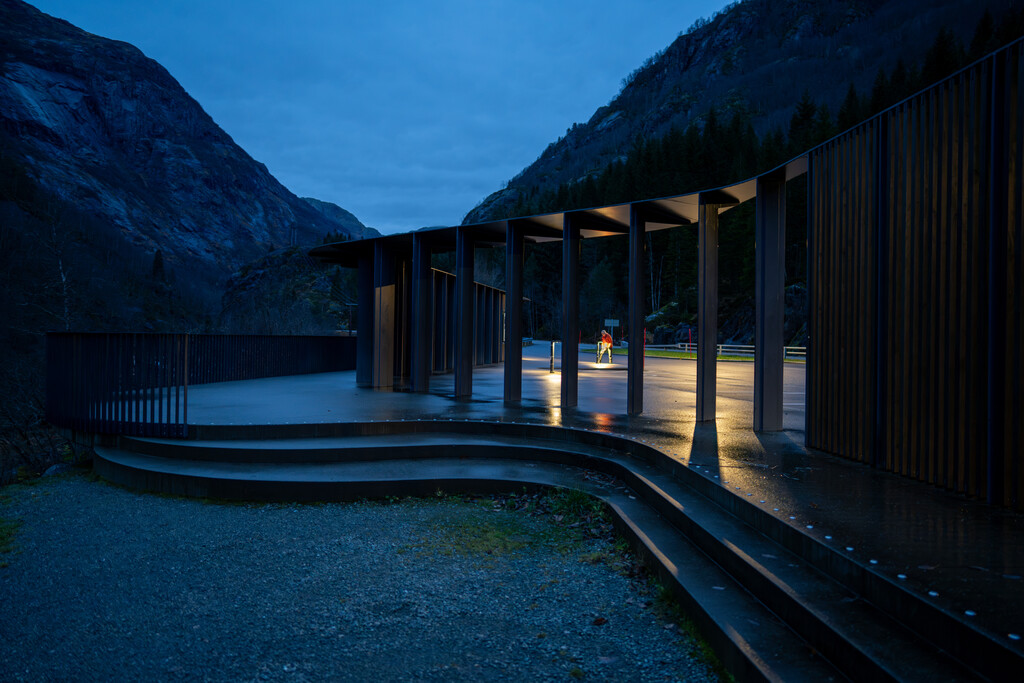
Day 3: you take the ferry from Jondal to Tørvikbygd and drive east to Tyrvefjøra in Indre Ålvik. Tyrvefjøra has two pine-log toilets under a roof by architects Helen & Hard, and is open from early May to late October. You sleep at Brakanes Hotel in Ulvik: about 3,500 NOK ($380) with free cancellation, double room with fjord view and breakfast.
Hardanger also has a toilet at Vøringsfossen above Måbødalen. It is a detour from Ulvik (about an hour each way), so only add it if you have the time.
Day 4: You go from Ulvik via Voss and Flåm to Aurland, and then drive 8 km up the mountain to Stegastein. DesignCurial named this one of the world’s ten best public toilets in 2016. There is a parking fee, you may not stay more than half an hour in summer. That should be plenty of time for most people. Those suffering from dyschezia may need to take the shuttle bus up to give themselves enough time. The viewpoint is open all year, but the toilets are open only from early May to late October. You can stay at Vangsgaarden Gjestgiveri in Aurland for about 3,250 NOK ($355) with breakfast. Flåmsbrygga Hotel is about 10,000 NOK ($1,090).
Day 5: You drive from Aurland to Lærdal, stop at Borgund stave church a short way east of town, and then go west. Stop at Røyrnes, a new rest area on the Aurlandsfjellet route beside the fjord, 4 km west of Lærdalsøyri. Its toilet building is by Jensen og Skodvin Arkitektkontor and opened on 20 October 2026. Then go on to Sogndal and take the ferry across the Sognefjord to Balestrand. Kviknes Hotel is the grand old hotel here, about 4,700 NOK ($510) with breakfast.
Day 6: drive up the mountain to Utsikten on Gaularfjellet. It’s 37 km each way from Balestrand. This water closet runs on solar power and was designed by Code arkitektur. Afterwards you drive back via Sogndal and road 55 towards Skjolden. Turtagrø Hotel is a mountain hotel in Jotunheimen that has been a base for climbers since 1888 (the old building burned down in 2001 and a new one opened in 2002). It is about 3,880 NOK ($420) for two with breakfast and is the one to pick if you want the mountain setting, while Skjolden Hotel is about 2,800 NOK ($305).
Day 7: drive 3 km from Turtagrø to the Oscarshaug WC, by Jensen og Skodvin Arkitektkontor. Then you cross Sognefjellet to Lom and go on towards Geiranger. Hotel Utsikten in Geiranger is about 2,400 NOK ($260) with breakfast, and Union Geiranger Resort & Spa is about 5,500 NOK ($600).
The middle of Norway: Trollstigen, Trondheim and Helgeland, days 8 to 12
This is the part with the long drives and only one famous toilet to see, so the question is what else is there? Answer: loads.
Day 8: You take the Geiranger to Åndalsnes road, which is the Trollstigen and Geiranger scenic route: the Ørnesvingen viewpoint, Flydalsjuvet and the Trollstigen plateau. The road is normally open from mid-May to October or November and can close at short notice in heavy rain. You sleep at the Grand Hotel in Åndalsnes, about 2,300 NOK ($250), but book early.
Day 9: You drive via Dombås to Trondheim. Give yourself the afternoon in Trondheim for the Nidaros Cathedral, begun in 1070, so pilgrims have been coming here for almost 1000 years. Also see the old wooden houses of Bakklandet in Trondheim. You can stay at Scandic Nidelven, about 2,060 NOK ($225).
Day 10: Here you have a choice. You can drive the E6 highway north to Mo i Rana. In Mo i Rana you can stay at Thon Hotel Mo i Rana, about 1,900 NOK ($205) with breakfast.
Or you can spend an extra day along the Helgeland coast. It is one of the most beautiful parts of Norway, with mountains rising out of the sea and a lot of islands.
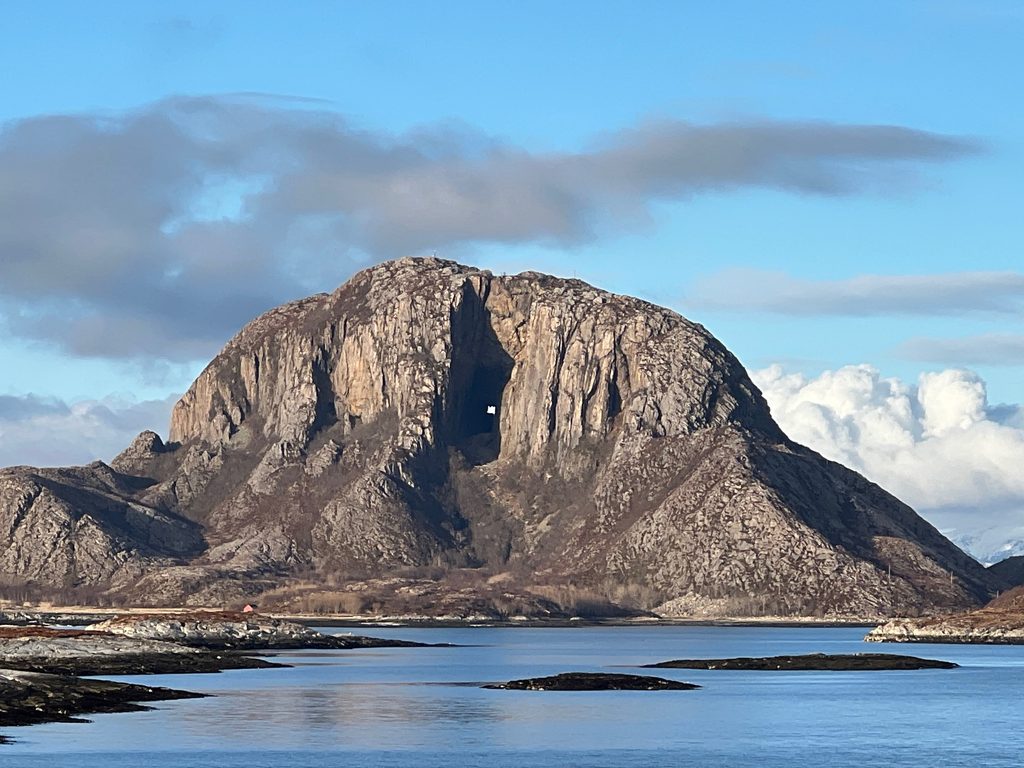
Bonus: three more outstanding shithouses are on that route: Sundshopen in Sømna, Torghatten near Brønnøysund and Sjonfjellet in Nesna. Sjonfjellet has a new toilet building by Atelier Oslo and a view towards Lovund and Træna.
The Helgelandskysten scenic route is road 17 and includes the Seven Sisters mountains near Sandnessjøen. It runs along the coast with ferries to take, and would add cost. The detour is not part of this main itinerary.
Day 11: This is day 11 if you’ve skipped the extra day on Helgelandskysten. Start by seeing Svartisen, the glacier near Mo i Rana. Drive on to Bodø over Saltfjellet and past the Arctic Circle. You sleep at Scandic Havet in Bodø, about 1,500 NOK ($165).
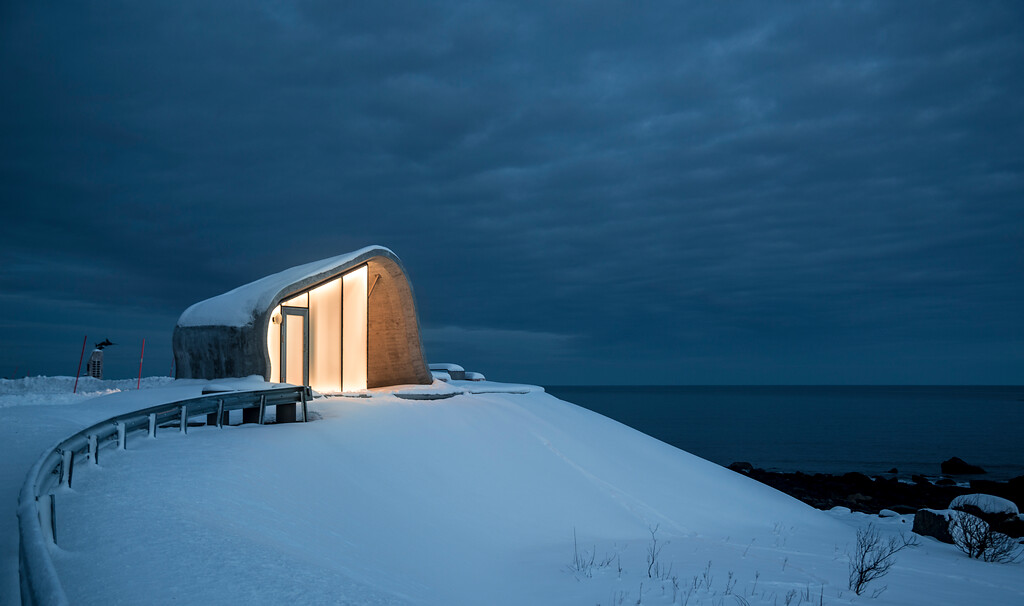
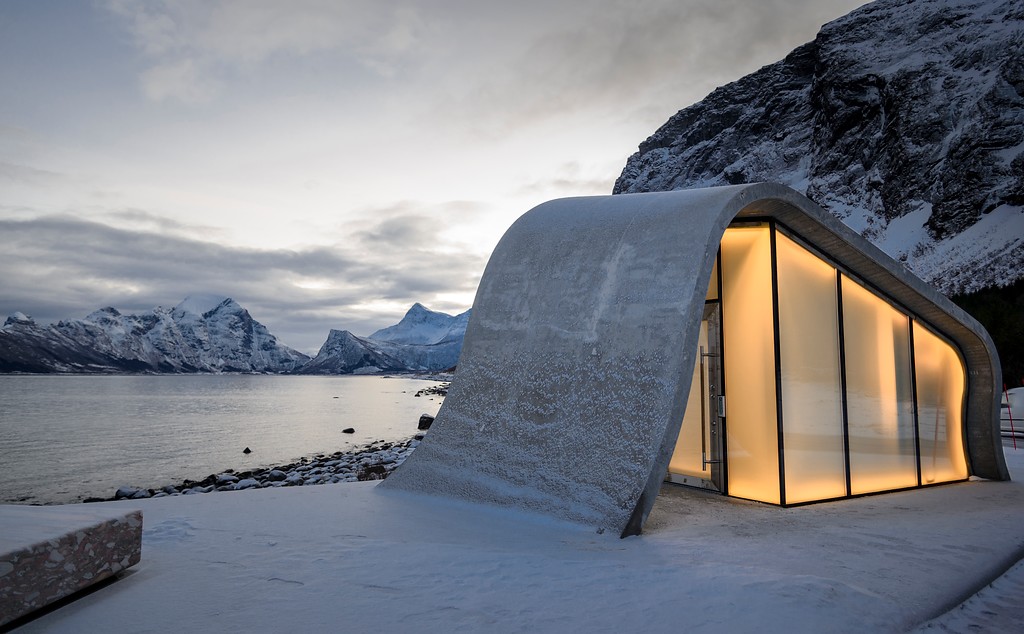
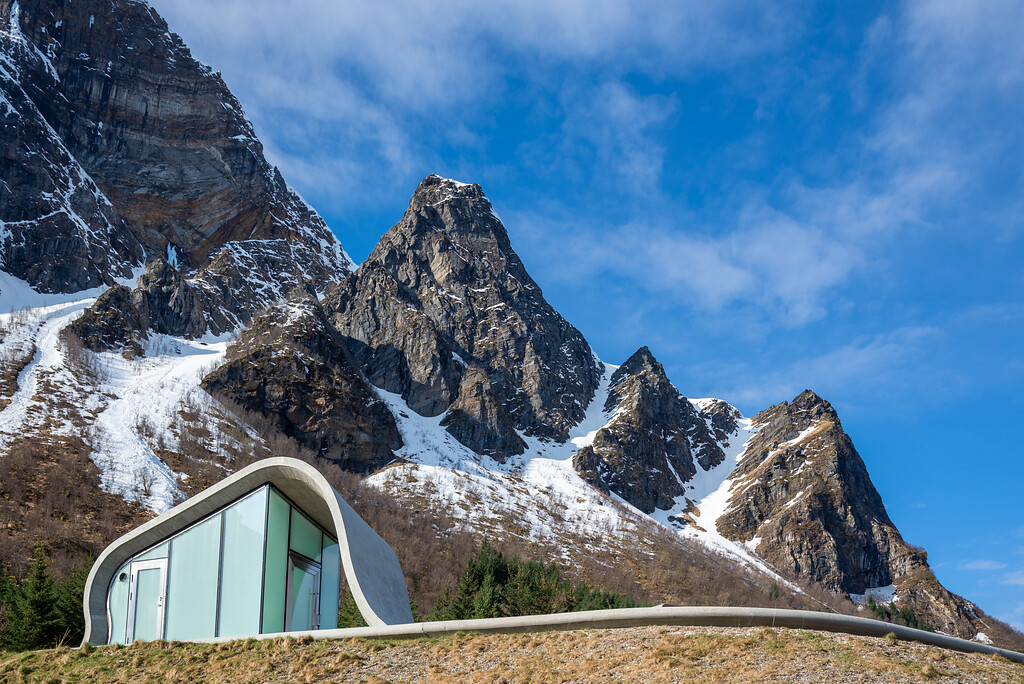
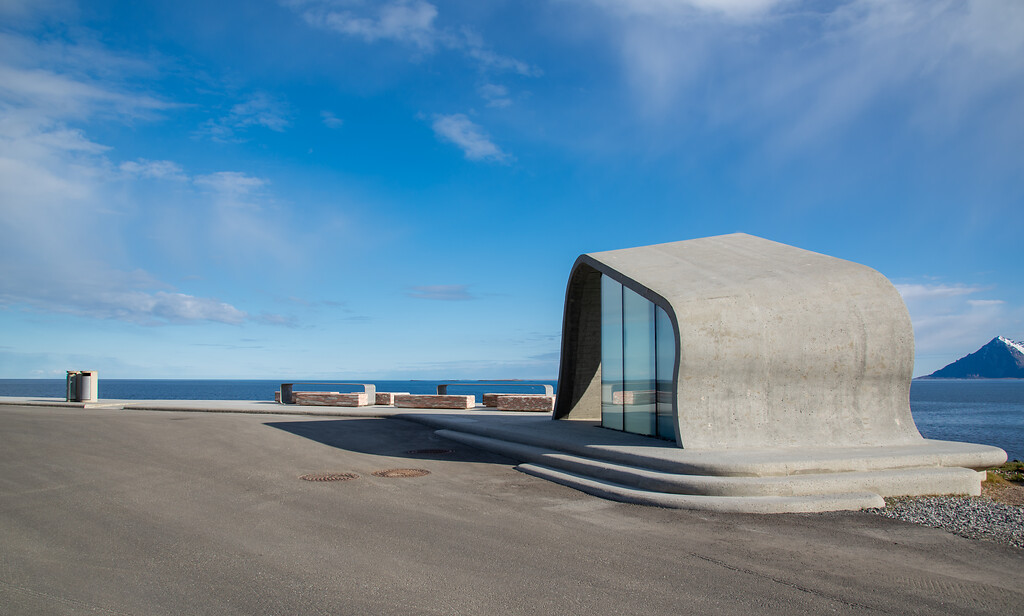
Day 12: Pay a visit to the Ureddplassen toilet, about an hour south of Bodø on road 17 in Gildeskål, by the firm Haugen/Zohar Arkitekter. It is the wave-shaped one that The Telegraph called the most idyllic public convenience in the world. It takes half the day, so use the rest for Bodø and the Saltstraumen tidal current just outside it. You stay at Scandic Havet again, about 1,500 NOK ($165).
See slideshow below, of Steinar Skaar’s now world-famous pictures, provided by Statens Vegvegen:
Northern Norway scenic toilet-trekking, days 13 to 19
Day 13: you take the ferry from Bodø to Moskenes. It takes three to four hours and runs up to eight times a day in summer. Half the car spaces can be pre-booked for a reservation fee.
Most of day 13 is the crossing. From Moskenes you drive the E10 through Lofoten to Reine. Lofoten Bed & Breakfast has rooms with a shared bathroom for about 2,100 NOK ($230) with breakfast. Again, book early.
Day 14: Drop by Eggum, the toilet designed by world famous architects Snøhetta. It is built like an amphitheatre beneath the ruins of a wartime radar station. Two more scenic route toilets are on the way: Brunstranda, a building with three toilets and a lounge, and Hauklandstranda on Vestvågøy. You sleep at Thon Hotel Svolvær in Svolvær, about 2,900 NOK ($315) with breakfast.
Day 15: Drive from Svolvær to Fiskebøl, take the ferry to Melbu, go on via Sortland and cross the bridge to Andøya. You can stay at Marmelkroken in Risøyhamn, a studio for about 1,500 NOK ($165), with no breakfast. No iconic toilet today, but you may use other popular and available poorooms.
Day 16: you go to the lauded WC facilities at Bukkekjerka on Andøya, by Morfeus architects, with ocean views from the throne. Visit Norway’s page says it is closed until further notice, so check before you go.
During summer season you can then take the ferry from Andenes to Gryllefjord on Senja island, a crossing of 1 hour and 40 minutes. It usually runs from mid-May to late September, with two to three departures a day, but check the timetable. Torsken Brygge hotel on Senja is about 2,000 NOK ($215) with breakfast.
Day 17: the Senja scenic route to the Tungeneset facilities by the designers at Code arkitektur, and the epic golden toilet at Ersfjordstranda is on the same route. Near to the golden throne is the new silver building, Sølvkiosken, with three toilets, a kiosk and an outdoor shower. Then drive to Botnhamn for the ferry to Brensholmen. The ferry takes about 45 minutes, runs all year and cannot be pre-booked, so show up early in the summer. From the ferry it is a short drive to Sommarøy Arctic Hotel, on an island above the Arctic Circle, with hotel rooms, seaside cabins, wellness facilities and a restaurant, about 2,150 NOK ($235).
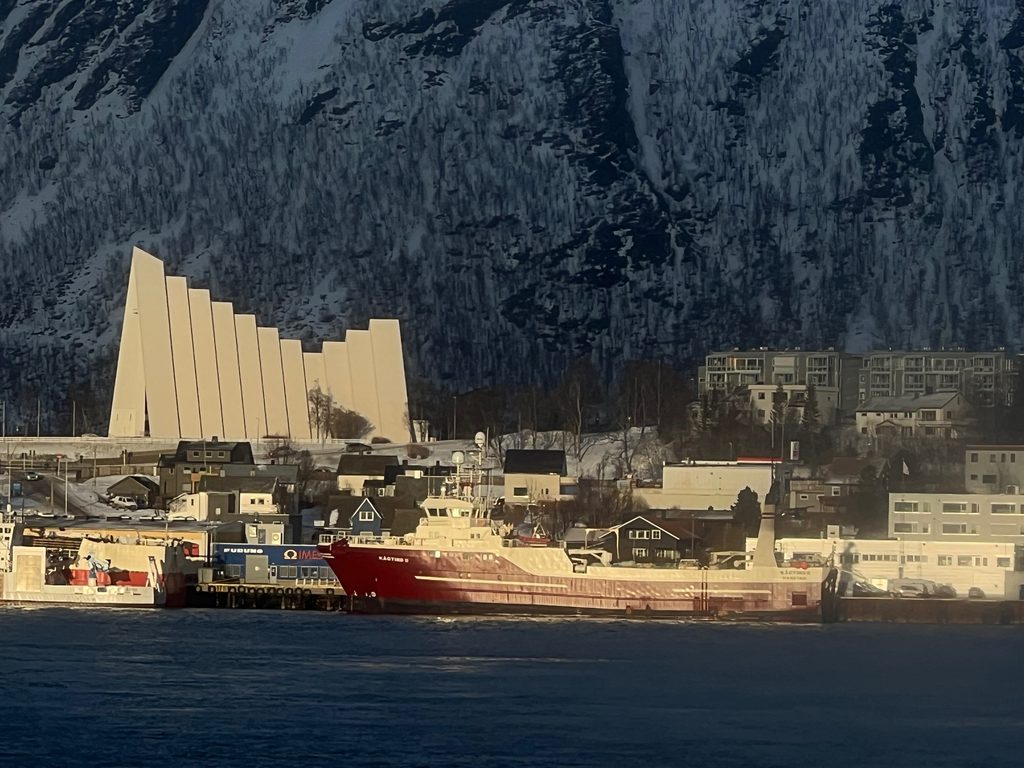
Day 18: From Sommarøy it is about 50 minutes into Tromsø, where the Arctic Cathedral is the obvious sight to see. Then you face an almost six-hour drive to Alta, where you can see the UNESCO-listed prehistoric rock carvings at the Alta Museum. Canyon Hotell is about 2,000 NOK ($215) with breakfast.
Day 19: you drive from Alta to Kokelv and then road 889 to the Selvika pit stop, which is 14 km south of Havøysund. Selvika is a concrete sculpture by Reiulf Ramstad with a toilet and shelter. An apartment from Nord Hus Service is about 2,000 NOK ($215), with a kitchen and no breakfast. The day’s drive will take three to four hours.
Days 20 to 24: the car goes on Havila or Hurtigruten*
Southbound coastal ships call at Havøysund every day. If you book early enough you can drive the car on, sleep on board and sail south to Bergen. Havøysund to Bergen is four and a half days’ sailing and covers about 2,000 km by sea. A cabin is required for any trip over 23 hours.
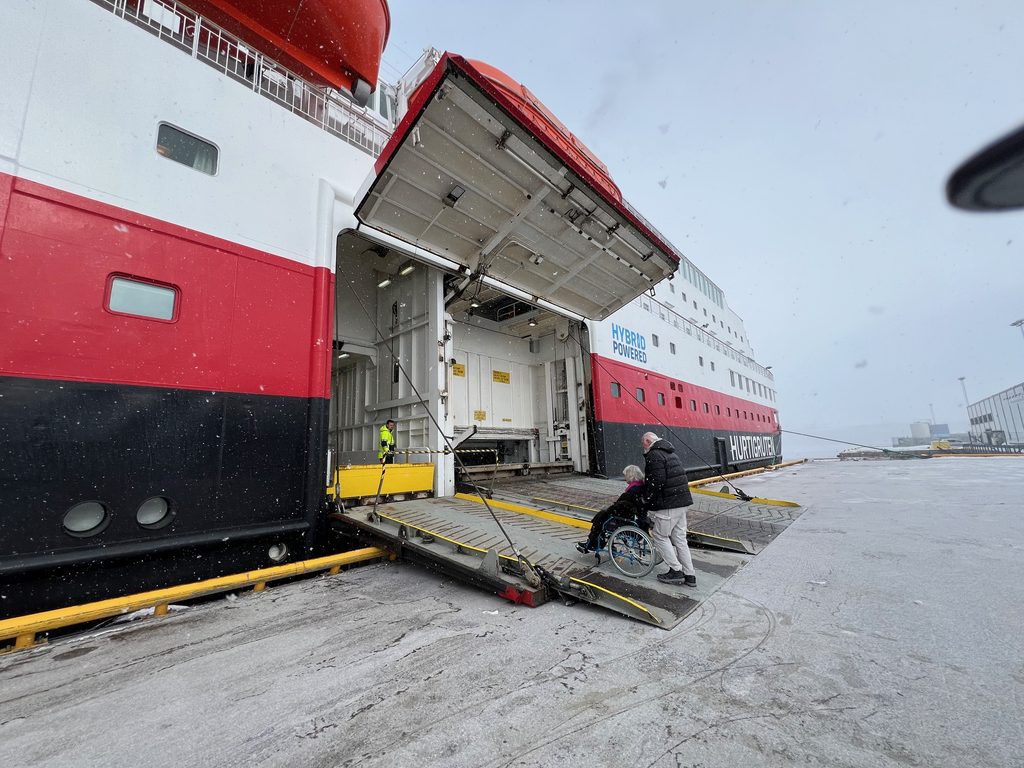
If you would rather cut the trip short, you have two options. A: fly home from Tromsø. After day 17, drive into Tromsø on day 18, return the car there and fly home, skipping the rest. B: carry on for the final toilet, Selvika near Havøysund. That means about six hours of driving from Tromsø to Alta and three to four more to Havøysund, a lot of road for one toilet. Then drive back to Alta and fly from there, skipping days 20 to 25. Either way, make sure the car rental company allows you to return the car somewhere other than Stavanger, for which they will charge a (hefty) one-way fee.
Day 25: Bergen to Stavanger
In Bergen, drive the car back to Stavanger and fly home from there. The drive takes about five hours on the E39, with one ferry crossing on the way.
Before you go potty in Norway
- Season. Go in June, July or August if you want to do the whole trip. The Aurlandsfjellet mountain road normally opens on 1 June and closes around 15 October, and the Sognefjellet road runs from late May to early autumn. The mountain section at Utsikten closes in winter. North of the Arctic Circle you also get the midnight sun in the summer.
- Rental car. Most rental cars carry an AutoPASS tag, and tolls and most ferries are billed to your card after you return the car. Some cars in Norway are still manual, so book an automatic early. You will be driving one car for 3000 km over 26 days, so ask about mileage limits.
- Hotels. The prices in the text are all estimates, for two adults in a double or twin room, from Booking.com on 31 October 2026 for a trip starting in mid-June 2027, including taxes. Prices will change and several hotels are seasonal, so book early and choose free cancellation where you can.
Also read: Forest bathing in Sweden
What does a Norway toilet tour cost?
The rough estimate for two people sharing a car and a double room is 140,000 to 180,000 NOK (about 15,200 to 19,600 US dollars). The tally is in the table below. You may need to add the flights.
So the question is: Is nature calling? Then you gotta go.
| Item | Low (NOK and US dollars) | High (NOK and US dollars) |
|---|---|---|
| SUV from Hertz, 26 days, picked up and returned in Stavanger, with insurance | 26,350 ($2,860) | 26,350 ($2,860) |
| 19 hotel nights, days 1 to 19 | 45,250 ($4,920) | 50,000 ($5,430) |
| Hurtigruten from Havøysund to Bergen with cabin, meals and car | 35,284 ($3,830) | 50,000 ($5,430) |
| Fuel | 5,000 ($540) | 8,000 ($870) |
| Ferries and tolls | 5,000 ($540) | 10,000 ($1,090) |
| Meals on the 20 days on land | 20,000 ($2,170) | 30,000 ($3,260) |
| Sights and extras | 2,000 ($215) | 5,000 ($540) |
| Total for two | 138,884 ($15,090) | 179,350 ($19,490) |
| Per person | about 69,400 ($7,550) | about 89,700 ($9,750) |
NB: the Hurtigruten figure is the one that can vary most, because summer prices were not yet bookable. As previously stated, the cost of flights is not included.
* Hurtigruten takes cars on port-to-port sailings of its Original Coastal Express, but not on the Signature ships (MS Trollfjord, MS Finnmarken and MS Midnatsol). Add the car to your booking through the Customer Service Centre, because space is limited. Port-to-port sailings open for booking six months ahead, so a sailing in early July opens in early January. Hurtigruten’s page does not mention rental cars, so ask your rental company in writing before you book. For an April date, the cheapest cabin with all meals and the car cost 35,284 NOK ($3,830) for two. Summer will cost more.
I do paid social media work for Visit Norway. Some media organizations can afford humans to do lots of research. All I could afford was an AI assistant. Double-checked most, please get in touch if you find any mistakes. All opinions are my own.