

Samburu, Kenya
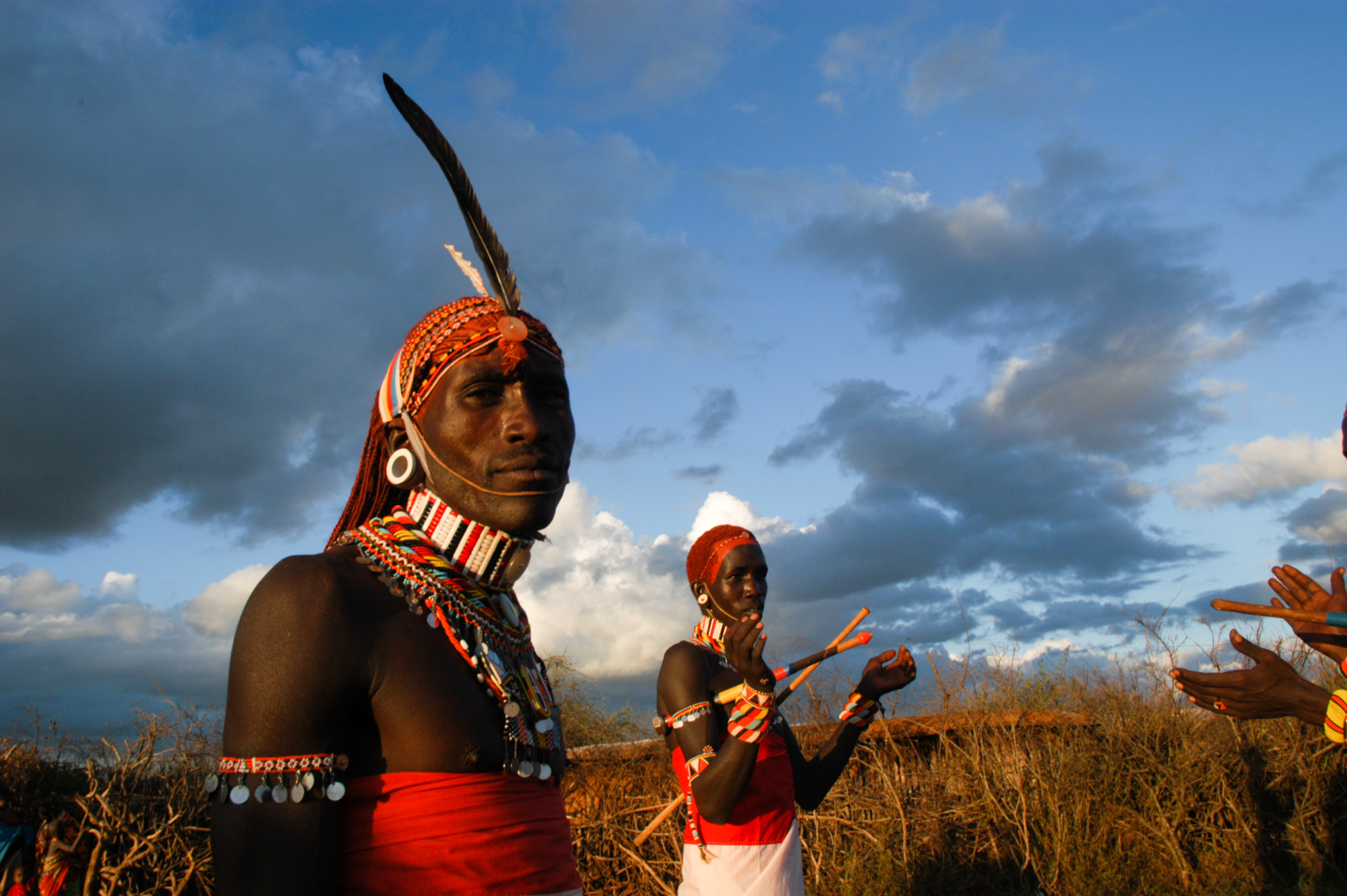
The people of the remote region of Samburu, Kenya are a Nilotic people who migrated southward hundreds of years ago from the Nile Valley.
They went south from what is now Sudan and settled north of Mount Kenya and south of Lake Turkana. Some visitors to Samburu have wondered whether the tribe descends from a lost Roman legion.
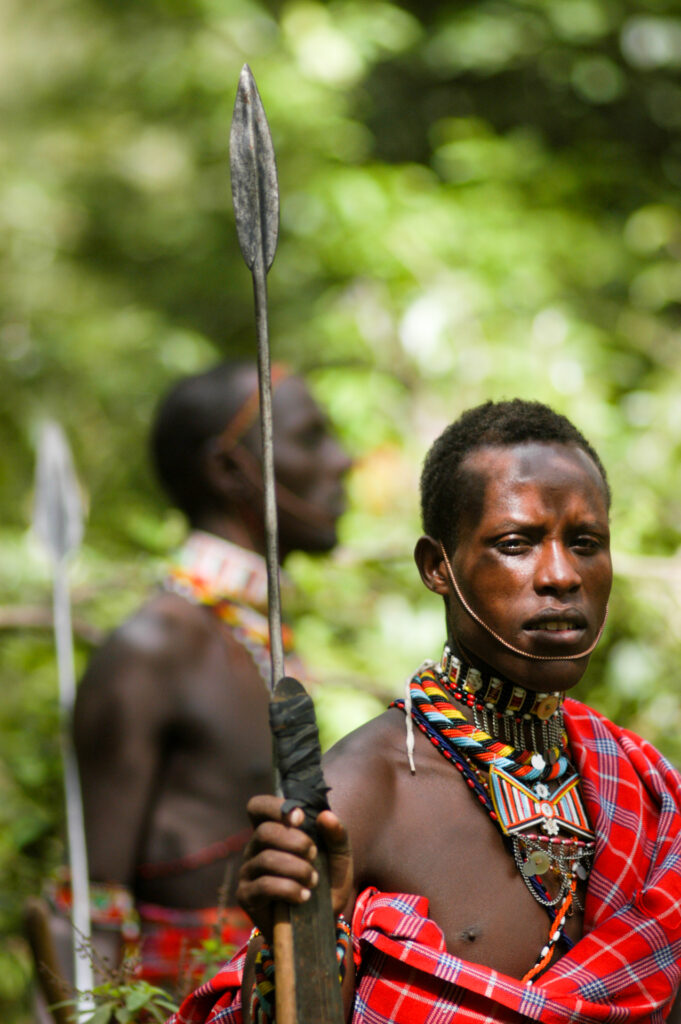
It doesn’t take much imagination to draw parallels between their traditional clothing (including swords and spears) and the robes, sandals and weapons of a Roman legionnaire a couple of millennia ago.
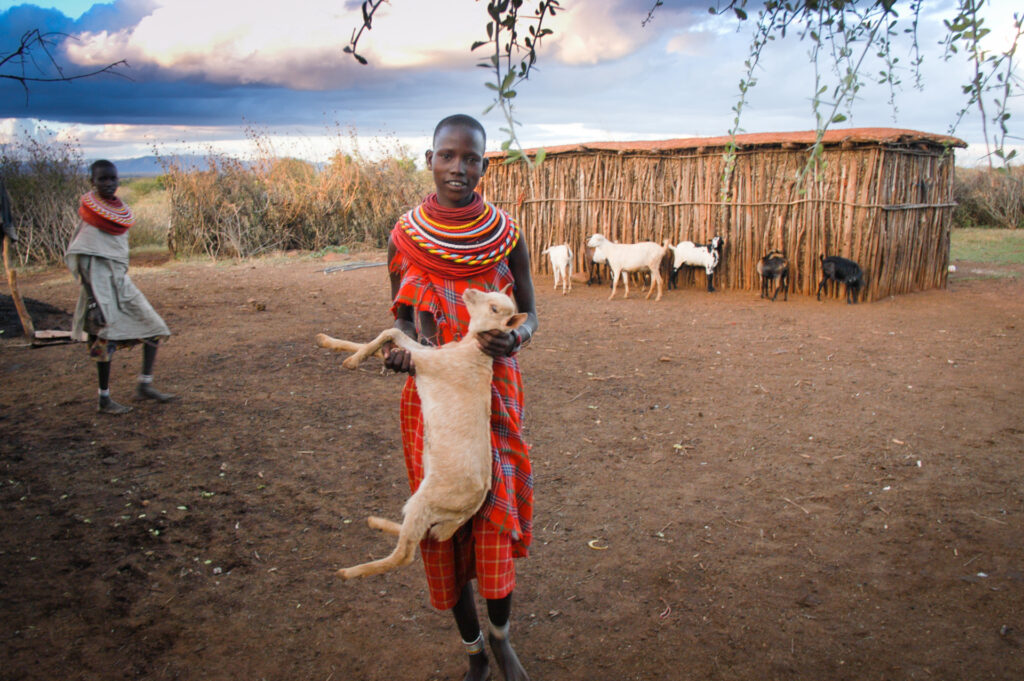
The Samburu way of life and survival revolves around cattle, sheep and goats. Arid conditions force these semi-nomadic shepherds to search constantly for new and better pastures.
Samburu tribe traditions
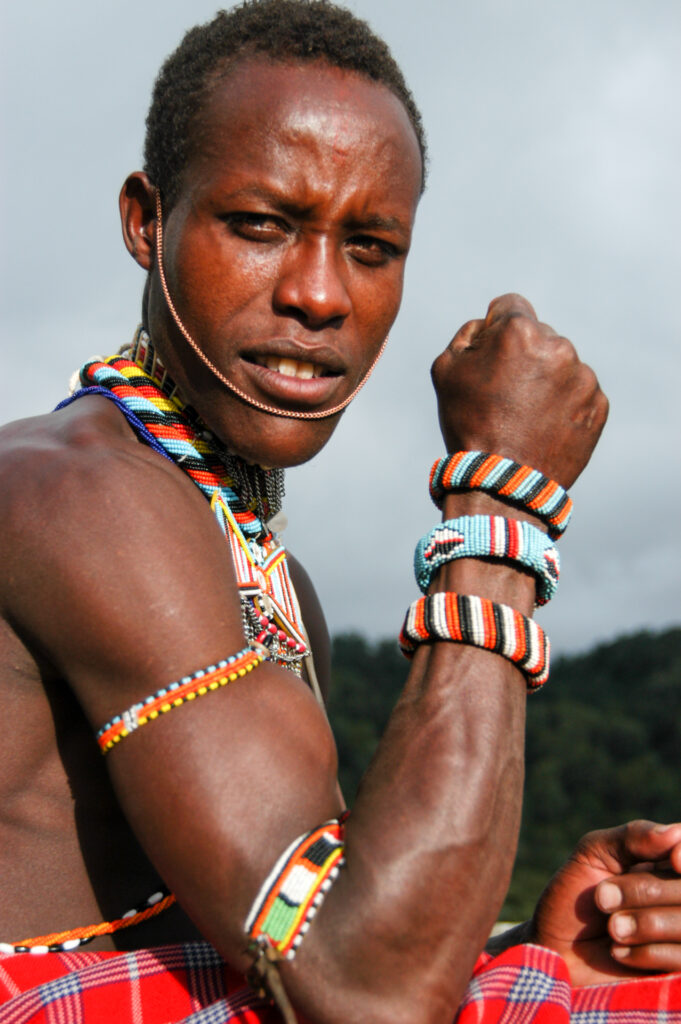
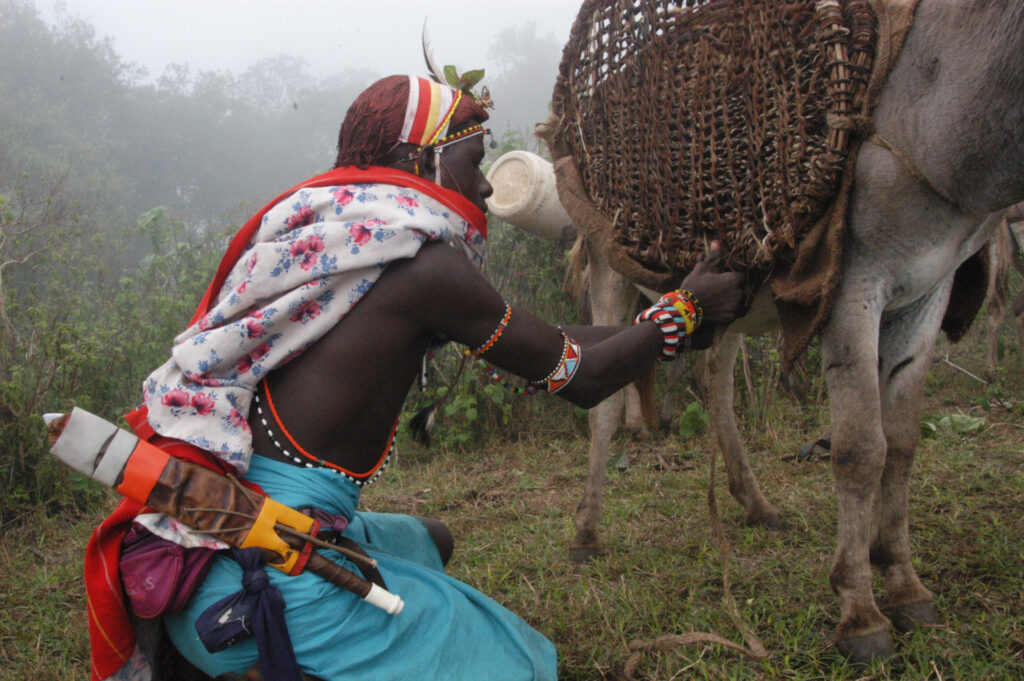
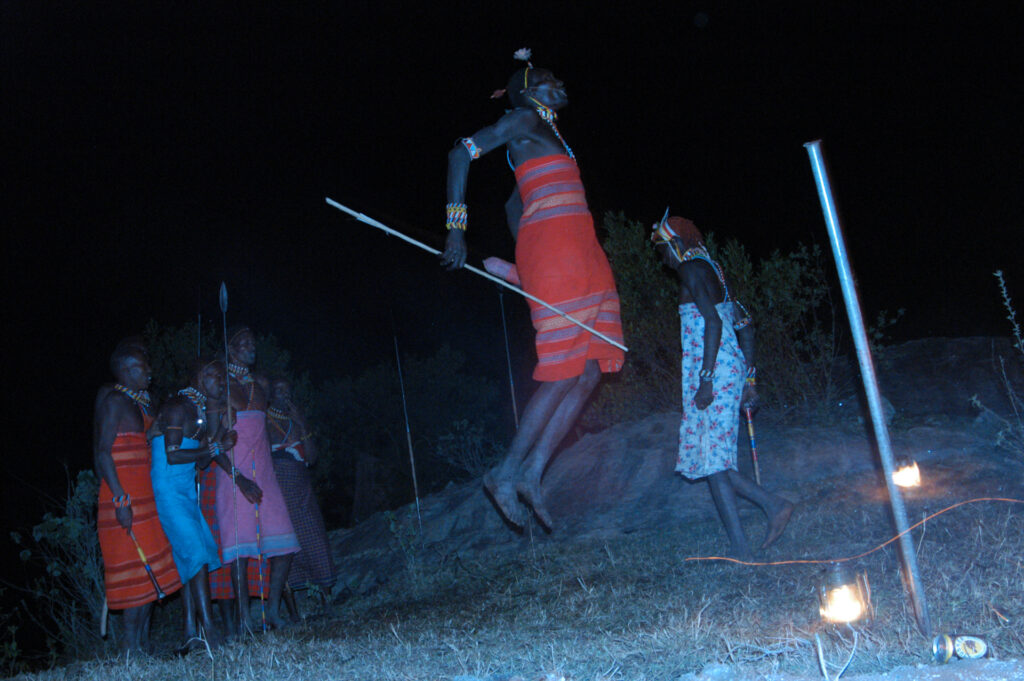
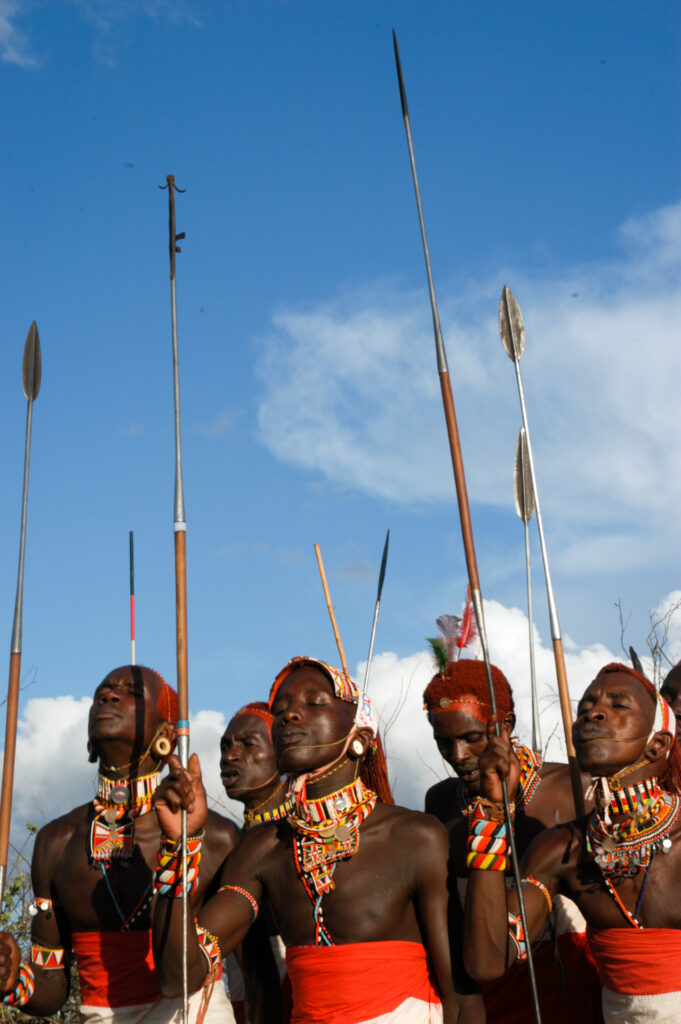
The Samburu are very closely related to the Maasai, and many of their traditions are strikingly alike. They wear colorful clothing (the robe is called a “shuka”) and adorn themselves with beads and jewelry, although colors and styles vary. The Samburu love to dance and sing, but they use no musical instruments. The men’s dance is a competition: they form a circle and jump in place, trying to outdo each other in height.
The structure of a Samburu village is also similar to that of a Maasai village. One thorn fence inside the village keeps the cattle, while a larger thorn fence outside protects the entire village. The huts are made of braided tree branches, mud and cow dung, and are easily taken down for transport.
Samburu people’s language
The Samburu and Maasai languages are so similar that Samburu is classified as a dialect of Maa, the language of the Maasai. Both belong to the Nilo-Saharan languages, a group spoken by 50 to 60 million people across a large swathe of Northern Africa, from Algeria to Congo and from Egypt to Tanzania.
There are fewer than 200,000 speakers of Samburu in Kenya. Other closely related languages are Dinka and Turkana.
The name “Samburu” comes from the Maa word “saamburr”, the leather bag carried by members of the tribe. The Samburu call themselves Lokop, or “land owners”.
Why is the Samburu tribe called “the butterfly people”?
The Samburu are called “the butterfly people” because of their elaborate clothing and accessories in every color of the rainbow.
The variety, and the sheer joy of accessorizing, is amazing. Samburu women wear bead neckwear that is both immense and immensely colorful.
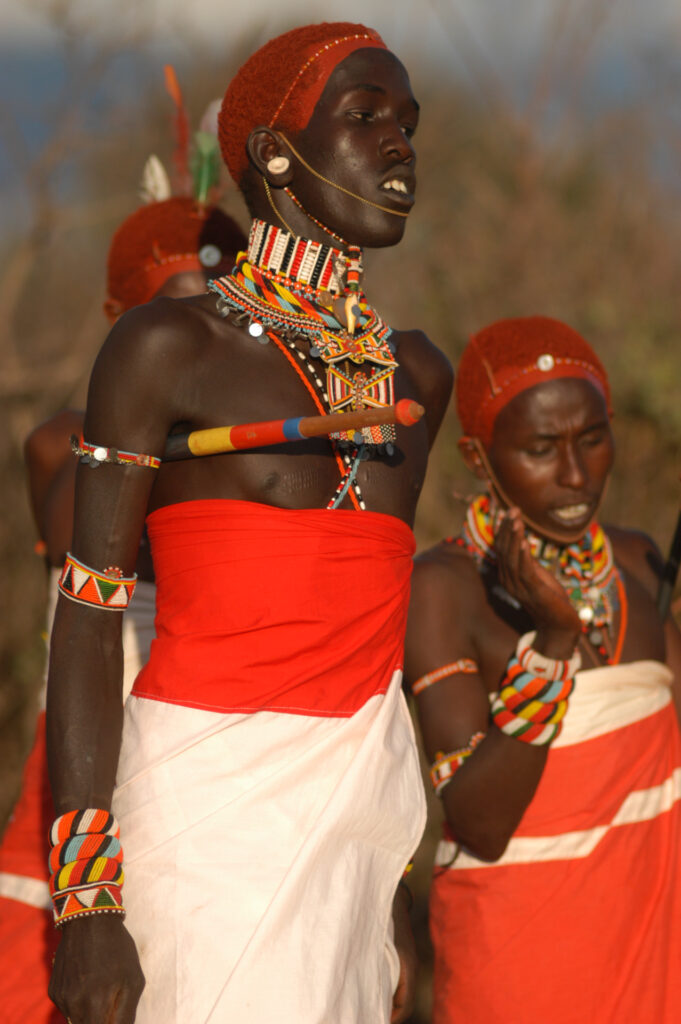
The men make you wonder whether the tale of the lost Roman legion is a myth. They carry swords that look like the swords of Roman legionnaires, and their robes and sandals add to the resemblance.
Experience Samburu, Kenya
We were awestruck by the Samburu people as we walked alongside the tribe’s warriors on a forest expedition organized by Samburu Trails.
If you’re looking for an inspiring wilderness adventure, Kenya’s Samburuland will make your wildest dreams of Africa come true.
Some visitors to Kenya stick to the south and the Mara. Don’t make that mistake. Some of the most exciting terrain and beautiful landscapes are in the north. It took us a full day of driving in a 1962 Land Rover from the south to the Samburu district. There we met the tribe’s chief, Lekermogo, who would lead us on a walking safari in the remote Leroghi mountains with his 18 young Samburu warriors.
They had come to meet us from the village of Bawa. They would be our protectors in this remote and dangerous part of Kenya, the El Bogoi valley.
Karisia Forest in the Samburu district
“Now we are going into the Karisia Forest, where some days are better than others,” the chief said through an interpreter in a solemn speech as we gathered around him. “In the forest there are elephants, buffalo and other wild animals. If our paths cross theirs, find a tree to hide behind. Seek a safe place.”
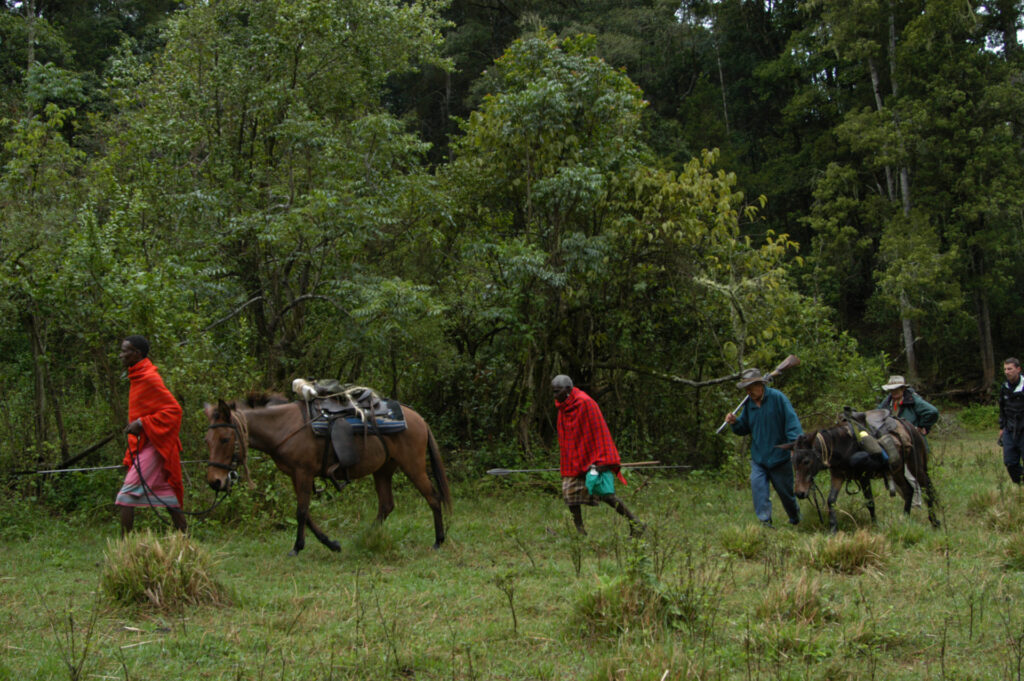
Slideshow: walking with Samburu warriors
Click the arrows to flip through the photos below.
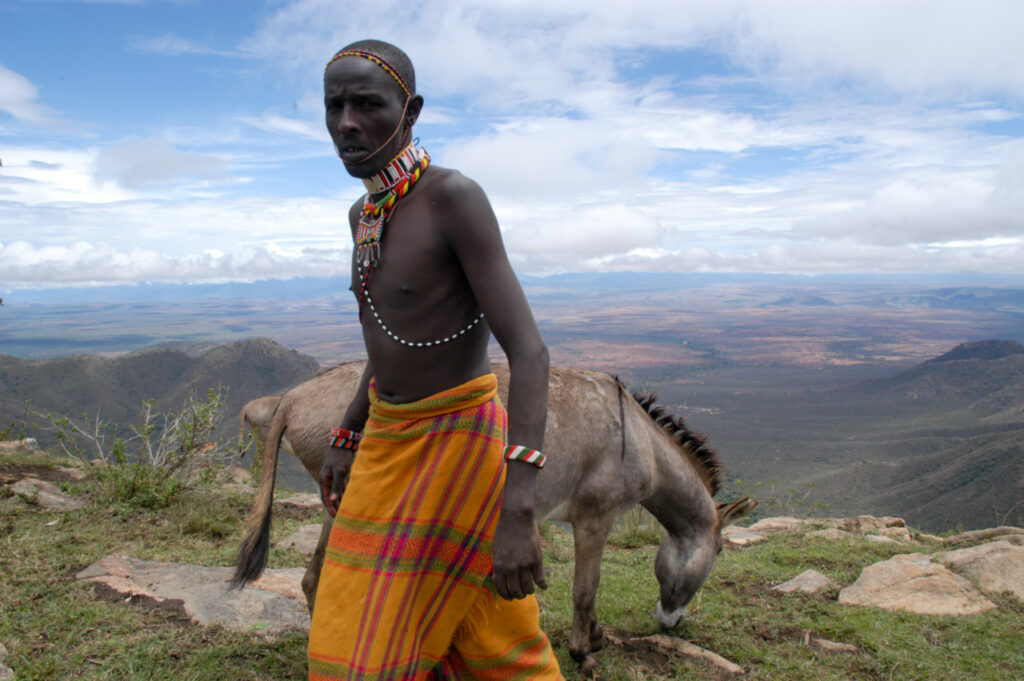
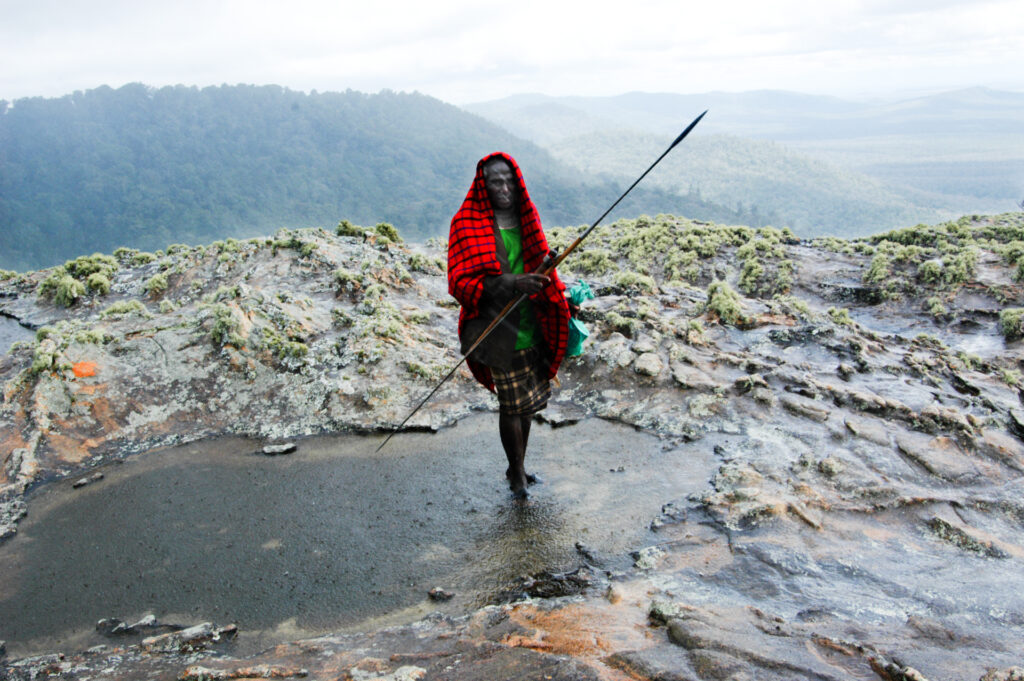
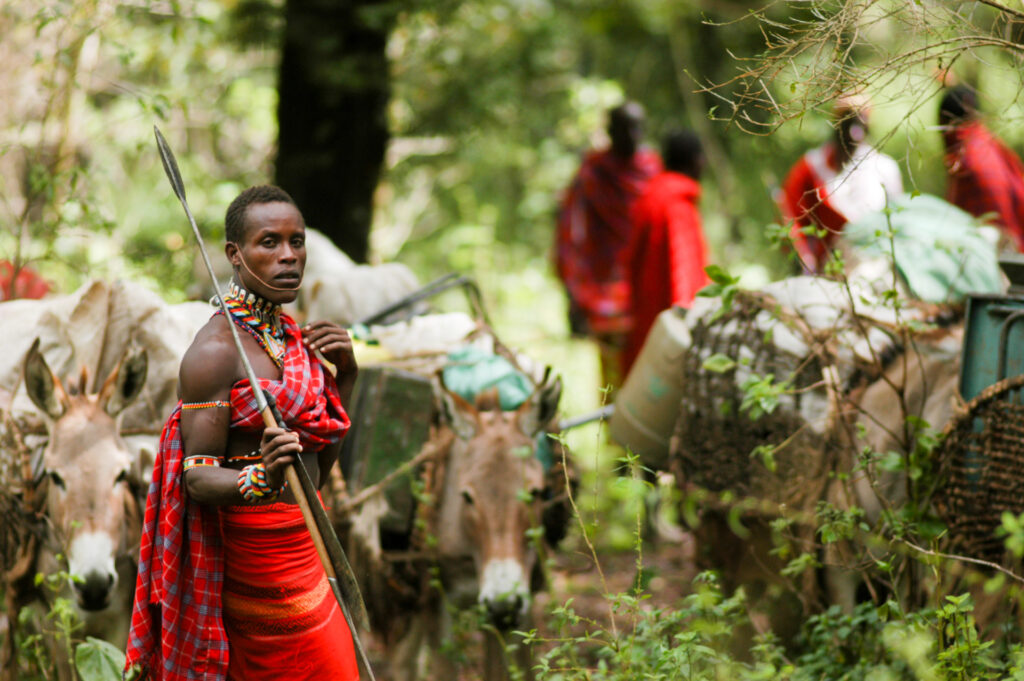
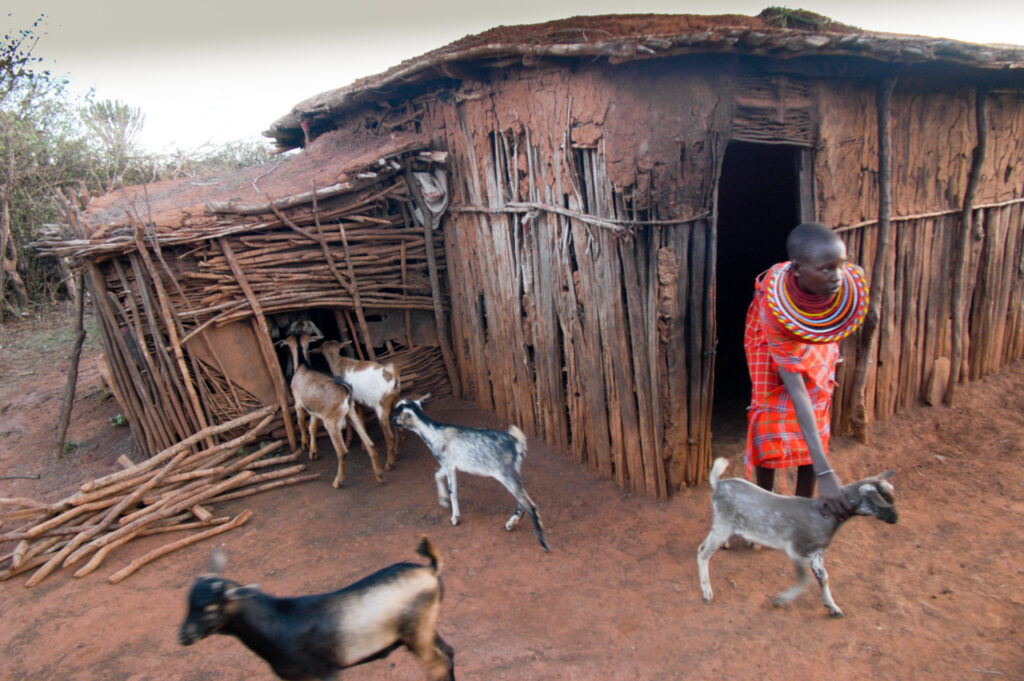
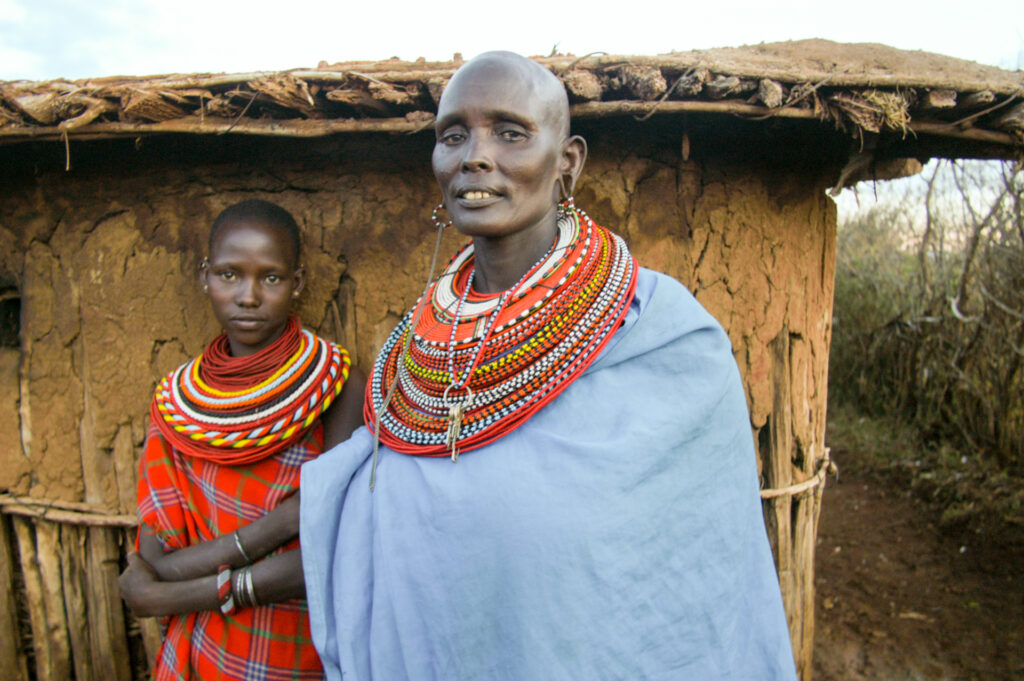
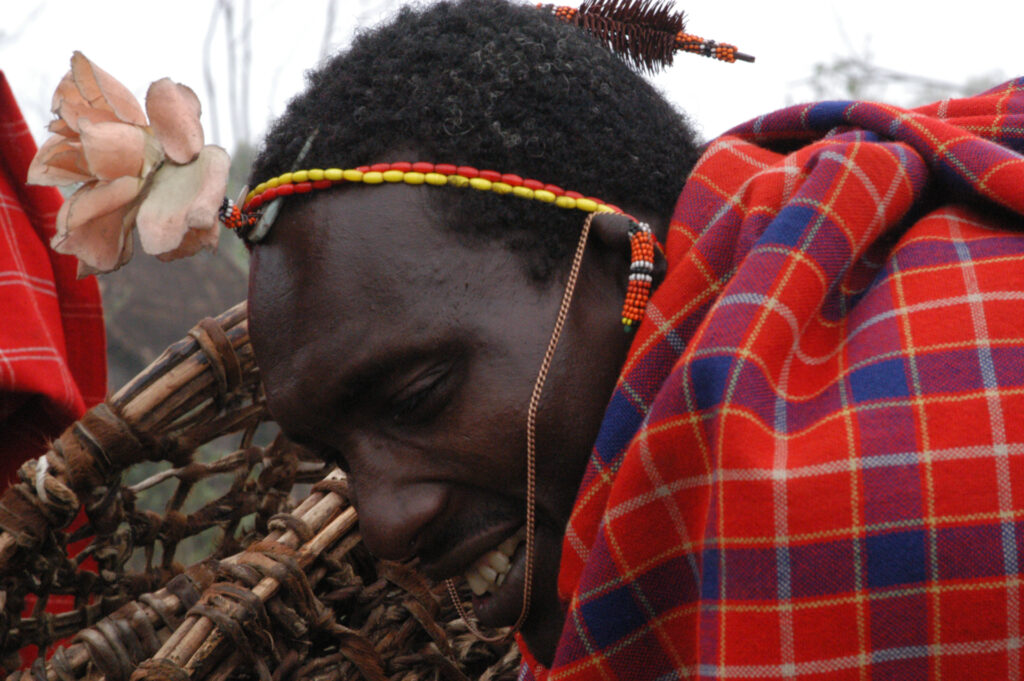
The old Samburu warrior straightened his crooked back.
“Now we must harden our hearts. We go into the forest, and the last one to enter must close the gate behind him….”
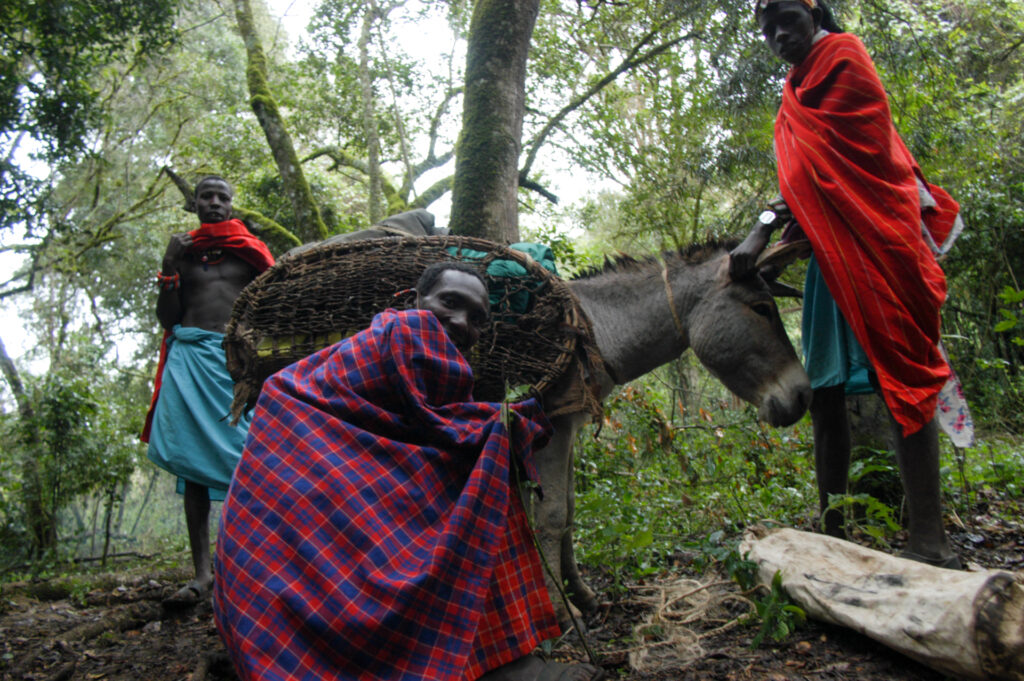
We chose our path over partially overgrown trails in rough terrain, with 20 donkeys and three mules carrying tents, blankets, water and baggage.
All around us we heard birds and baboons. We often saw the tracks of elephants. John Faull, our rifle-carrying Kenyan guide from Samburu Trails, warned us.
“The elephants around here are aggressive and dangerous. They’ve all had encounters with poachers,” he said.
Walking safari with the Samburu people
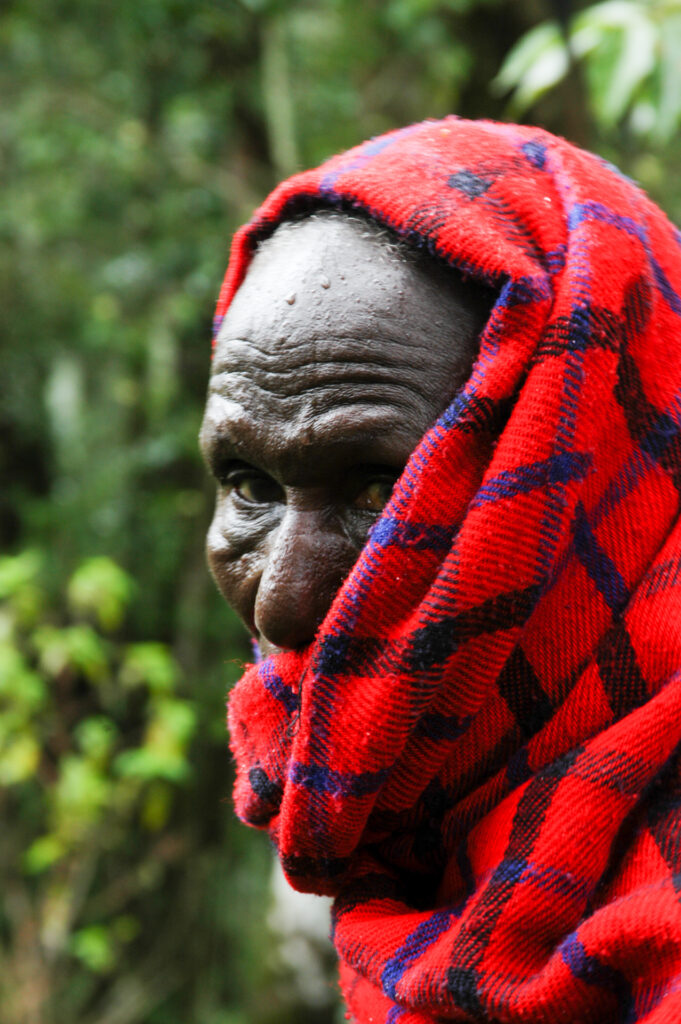
Our three-day walking safari started in Maralal (Kisima) and followed in the footsteps of the legendary, or infamous, Scottish elephant hunter Henry Neumann. The Karisia Hills lie between the eastern edge of the Great Rift Valley and the Matthews Range, also known as the Lenkiyio Hills.
In the 1980s locals found the remains of his main campsite at El Bogoi, including partially fossilized remains of giraffe and rhino. In 1893 Neumann had joined forces with the local Ndorobo tribe, and with them he hunted in dangerous territory where tribal warfare was common because of plundering.
Neumann had left Scotland for Africa to escape a boring life in Britain. After joining the Zulu wars in South Africa he arrived in Kenya. His diaries reveal a brutal life there. His Ndorobo assistant, whom the Scot called Squareface, was attacked and killed by a lion.
The Samburu know this area well, including the network of paths and tracks through the Karisia Forest, also known as the Leroghi range or the Karisia Hills. Some of the paths were made by elephants, some by Samburu herds of cattle. They are perfect for trekking with donkeys. John’s father, Peter Faull, started bringing tourists on trekking expeditions to Samburu.
The Samburu district had little tourism until recently, since it was off-limits to tourists for many years after Kenya became independent in 1963. Foreigners had to apply to visit Samburuland, and only a few permissions were granted.
Samburuland, home of warriors
The Samburu people and the tribe’s chief take care of guests from afar on journeys into the past, in what can only be described as luxury ecotourism. The workload for our Samburu hosts is formidable. Each morning they pack up the campsite and strap panniers on 20 donkeys and three mules.
Then it was out into the mysterious forest, a mix of tall cedars, umbrella thorns, African olive, chestnut and ancient podocarpus trees. On this walking safari you might come across an elephant in the thicket. We heard one sighing loudly next to us in the forest when a couple of the warriors showed us how to creep upwind to get a glimpse of the animals. But the bull elephant disappeared into the heart of the forest before we caught sight of him.
Mostly we could hear baboons, and catch a glimpse of one now and again. During our daytime walks the wild animals kept their distance, but we saw plenty of evidence of them: warthogs, the skull of a baboon that had perhaps been killed by a leopard, and the giant skull of an elephant killed by human poachers.
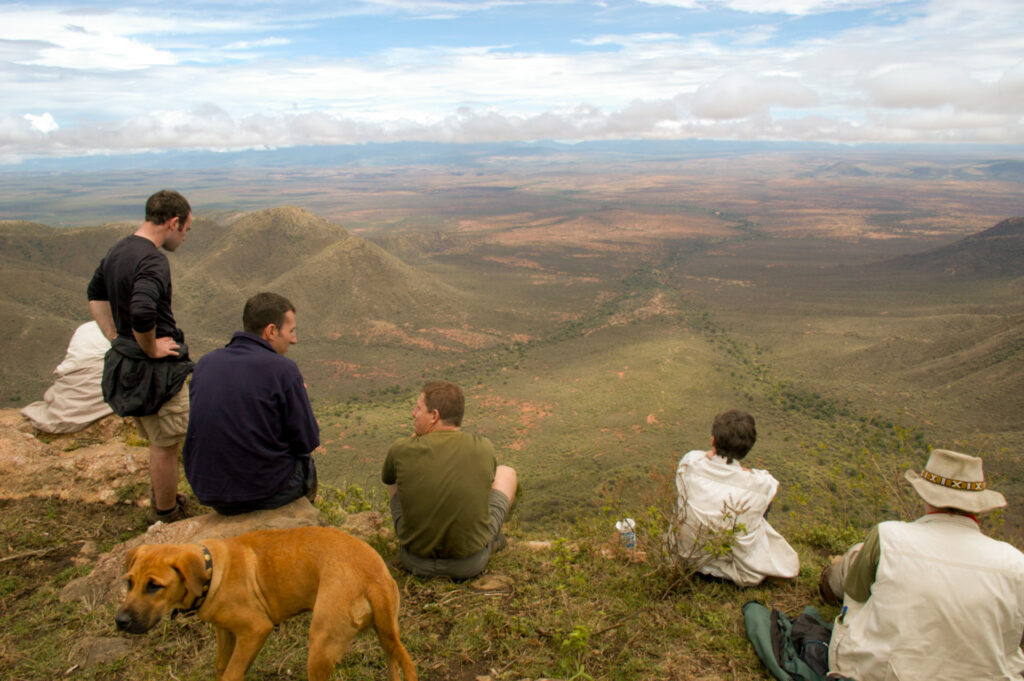
The campsites (Nangaro, Tilia and Naibolo Rock) were all different experiences. Nangaro seemed to be in the heart of the forest. Tilia had the most dramatic views, perched on an 8,000-foot ridge with mountain ranges in the distance. From our perch on the rocks at sunrise we could see a crowned hawk-eagle circling.
Most of the Samburu travel ahead of the visitors, who stroll at a leisurely pace for three to five hours. Our group consisted of six wide-eyed European trekkers. A couple of the warriors were always alongside us. If anyone tired, a saddled mule was there for riding.
Each afternoon the Samburu unpack the donkeys and mules. They set up the tents, unroll the mattresses and make the beds. They dig a hole near each campsite for the little toilet tent, which consists of a wooden seat within a simple box tent. Outside the toilet is a washing basin.
Life in the Kenyan wilderness
The Samburu make a wilderness shower by hanging a bucket of water on a branch above a wooden pallet. They heat the water over a campfire every afternoon. By the time we arrived at camp, everything was set up for us and the cook had started the evening meal. It was all western fare, not Samburu: pumpkin soup, red snapper, fresh mango for dessert. When one of the westerners had a birthday, they whipped up a cake.
Each night we spent a couple of hours telling stories around the campfire, hearing scary tales of elephants in the woods, leopards and baboons. Then we crawled into our roomy tents, wondering which animals we would hear tonight.
The sounds of the Karisia Forest were unknown to us. One night we heard a raspy sawing. In the morning we were told it was a leopard. We were relieved that the Samburu warriors were protecting us, with some of them always awake and their spears ready.
Less is more in Samburu
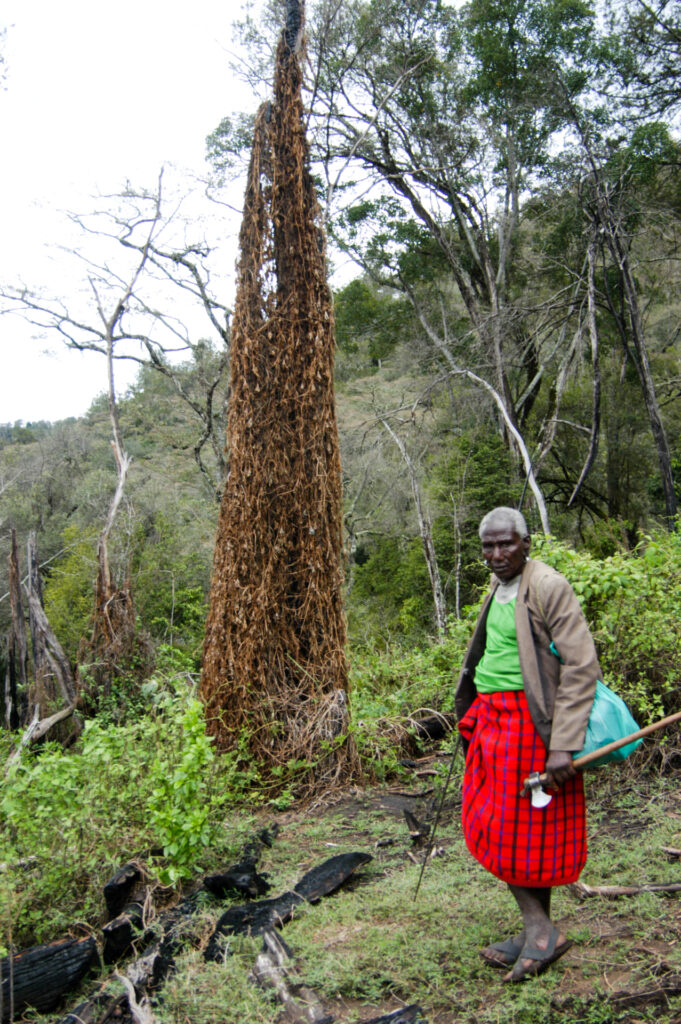
What do the Samburu think of the luxury offered to their guests? We are obviously dependent on our many possessions, which require this immense train of donkeys and mules to carry them all.
It’s embarrassing how many things westerners need on a simple walk. In addition to tents, mattresses, blankets and cooking gear, there were bag-in-boxes of wine, cases of Kenya’s favorite beer Tusker, laptops, chargers, many sets of clothes, toiletries and more. Lekermogo, on the other hand, makes do with a spear, an axe, a blanket and the small leather bag he calls his “saamburr”, even though he is chief.
When he needs to brush his teeth, he breaks off a supple branch of a particular tree and chews the end until it turns into a soft brush.
At the campfire at Naibolo Rock on the last evening of our trek, the Samburu warriors danced in the flickering light, embers flying into the night. They jump high, singing of women, cattle and battles with neighboring tribes.
When we reached the dirt road and the Land Rover the next day, at the place where we had entered the Karisia Forest, Lekermogo bid us farewell on behalf of the butterfly people.
“God is holding all of our hands, both the people who walk and the people of cars and airplanes. May the metal in your cars and airplanes be strong. If God wills, we shall meet again.”