

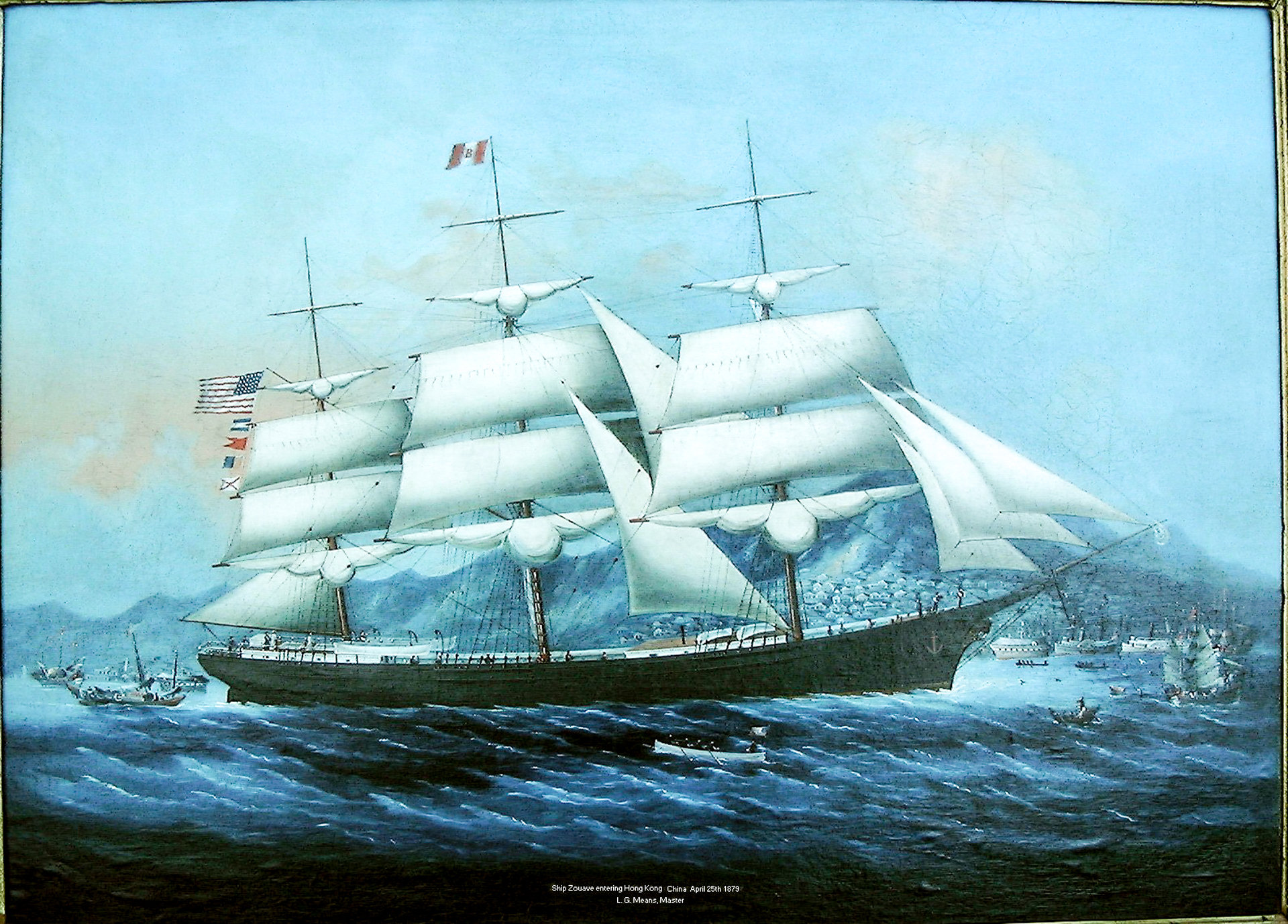
In front of me are a few pages of memoirs written by an old man. I read them again and again — about death, storms, pirates, and love, from the golden age of the great sailing ships.
Nebraska in the 1930s
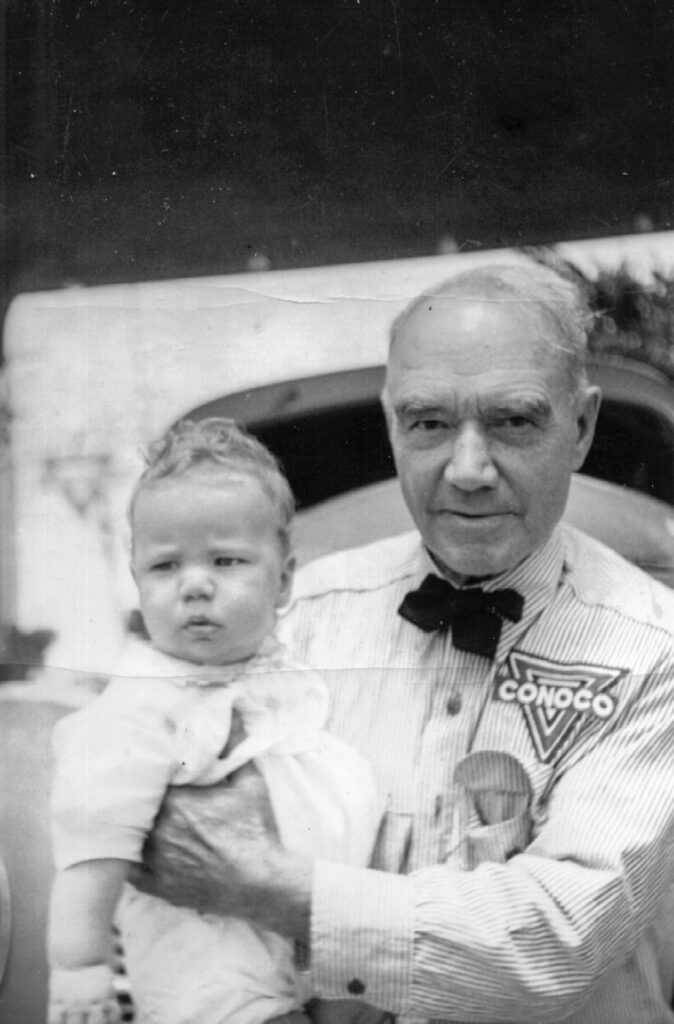
Had you been driving through Lincoln, Nebraska, sometime in the 1930s, you might have pulled your Plymouth Deluxe into the Conoco station. There you’d have spotted an older man in a striped uniform — pleasant, neatly dressed, with a bow tie and the Conoco logo on his chest. He would fill your tank and check your oil and tire pressure. You’d thank him for the service, maybe hand him a five-cent tip, and continue west along Highway 80. If only it had been possible to glimpse the memories behind those kind blue eyes.
Edgar Leland Means, born in 1864, started writing a memoir in his eighties. He’d barely gotten going when he stopped — mid-sentence. After eight and a half typewritten pages, the last words were unremarkable: “However the small room with bay window…” And then, nothing. Maybe he got bored, maybe he got frustrated, or too forgetful to continue. Maybe the following pages were lost. Or maybe he simply died, right there.
Built for speed
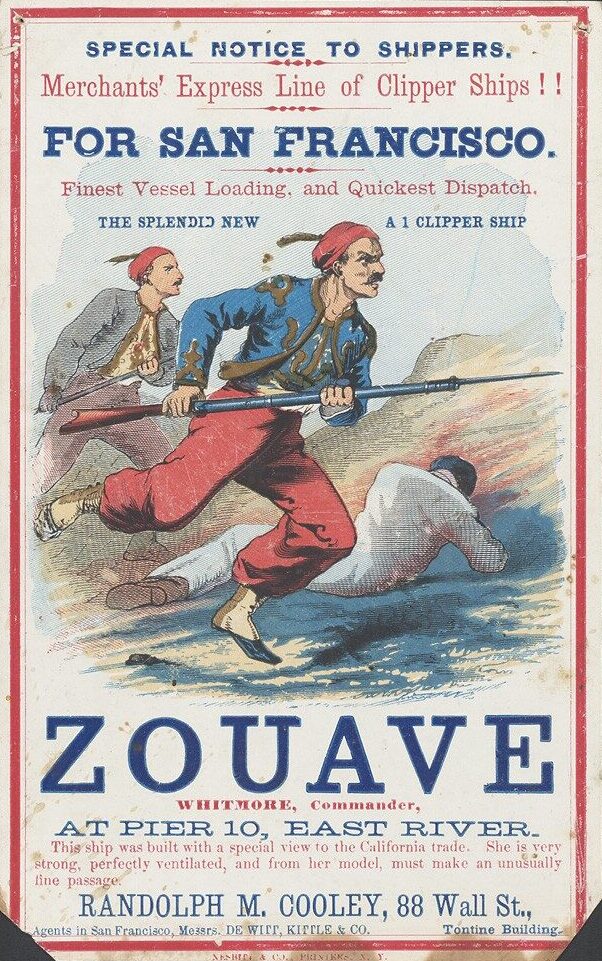
I’ve read those few typewritten pages dozens of times, out of pure fascination and a wish to understand my great-grandfather’s life. He was obviously old when he wrote Saga of the Sea, which is evidenced by the way he repeats himself and rambles a little bit. Still, the stories are irresistible. They’re about life on the seven seas, from his childhood aboard great American clipper ships in the 1870s.
Yet he spent most of his adult life in the middle of the United States, in Nebraska — about as far from the ocean as you can get. How did this man, who grew up at sea, end up Nebraska? Of course, it was love. As a young man fresh out of school, he took a train journey. On that train he met a banker who offered him a job. Edgar decided to go for it, and left the train in Nebraska. He married Jessie Banwell, the daughter of his landlord. He and Jessie had ten children, and generally did quite well. In 1902, Edgar simply bought the entire Bank of Orleans. The family sat for stately portraits in a grand villa. But when the great crash came in 1929, everything was lost — the bank, the house, the money, all. But he still had the memories of growing up at sea.
Edgar’s father was a ship’s captain from the state of Maine. Interestingly, this captain brought his wife and children with him around the world. Mostly she was busy being a mother and their school teacher, but at times she had to step up her game. Once she took the helm herself and steered the ship for a week, when her husband and part of the crew were laid low by illness while crossing the Atlantic.
Edgar’s memoirs, which he titled “A Saga of the Sea,” start like this:
“Those who follow the sea have more perils and dangers to meet and more thrilling experiences than those of almost any other vocation.”
The rest I’ve trimmed it a little and edited the structure for flow, but the words are Edgar’s own, exactly as he typed them:
“My earliest recollection is of the sea. Until I was 16 years old, my life was passed on large Yankee sailing ships, and they were the only home I knew. One of my earliest recollections was the first voyage we made around Cape Horn in the dead of winter, in the clipper ship Industry. We were carrying guns and ammunition to the Peruvian government, Chile and Peru being at that time at war.
“The wind was constantly against us, with one head gale following another in almost unbroken succession. When we reached Cape Horn, the sea was teeming with icebergs and a sharp lookout had to be kept at all times.
“It seemed impossible to make progress against the storms. What we gained one day we would lose the next. From 50′ South on the East side to 50′ South on the west side we were 55 days. A chart showing each day’s position, made by my father, hung for several years in the New York Chamber of Commerce.
“The crew was exhausted, having had little rest night or day. The intense cold and ice made it difficult to handle the ship, all the ropes frozen and stiff. I was in the cabin door, watching a man working on the topsail yard. I saw as he lost his hold, slipped and fell. He struck the deck, never moved a muscle, was killed instantly. I was then 4 years old.
“The next day we buried him at sea. All hands were gathered at midship, the ship brought to a standstill by backing the main yards. Father read the service from the Bible. The body, sewed in canvas and weighted with stones, was consigned to the sea.
“One night while in Valparaiso, an American ship anchored close to us burned to a total loss. At that time all ships had tarred hemp rigging. A blaze would start at the rail on a hemp rope saturated with tar and with a serpentine movement, rapidly engulf the top. In a short time, the entire ship was in flames.
“I remember my father coming and waking me, wrapping me up in a blanket and taking me on deck in his arms to view this wonderful sight. The night was clear, the sea quiet, scarcely a ripple breaking the surface of the water. Valparaiso is a fine and beautiful harbor nestling at the foot of the Andes. That night it teemed with vessels from all parts of the world. The harbor and sky were illuminated and all objects showed in bold relief. It was a spectacular sight and one you could never forget.”
About 130 years later, his great-granddaughter saw Valparaiso in full spring sunshine. There’s clearly more of Edgar left than just those few typewritten pages. Some part of him lives on in me: I carry the same longing that has existed for so many generations: to follow the sea.